Social Voice
  • Home
  • Brands & Agencies
    • Video Insights Co-Pilot
    • Solutions
  • Social Listening Platforms
  • Case Studies
    • Brand Safety
    • Skin Care
  • About
    • Our Story
    • Our People
    • Unmuted [ The Blog ]
  • Request Demo
  • Menu Menu
You are here: Home1 / Blog2 / Social Intelligence

Inside the Signal: What AI Actually Hears When It Listens to Social Video

Social Listening, Social Intelligence

Most brands have spent the last decade training themselves to think about AI as something that reads. It scans posts, ranks comments, pulls sentiment scores from text. That mental model worked when conversations lived in tweets and reviews. It does not work anymore. Video AI listening is now the layer doing the heavy lifting, and it processes something fundamentally different to anything a text-based tool can see. 

The shift is not subtle. When AI processes a TikTok, an Instagram Reel or a YouTube video, it is not just transcribing the words. It is reading the speaker, the setting, the on-screen visuals and the way every one of those signals lines up with the others. That combined read is where brand truth actually lives, and it is the reason most enterprise social listening dashboards are still showing you a fraction of the conversation. 

The Words Are Not the Message

Start with what looks obvious. A creator posts a video reviewing your product. “This coffee maker is amazing,” they say. A transcript tags that as positive sentiment, and your dashboard ticks up by one. Job done. 

Except that exact sentence can mean five completely different things depending on how it is delivered. Rising pitch with accelerated pace is real excitement. The same words in a flat monotone is sarcasm. A breathy half-laugh on the word “amazing” is performative. A tired delivery at the end of a long unboxing is resignation. The words have not changed. The meaning is opposite. 

Video AI listening reads the delivery, not just the words. The system is not asking what the creator said. It is asking what the creator meant, and how strongly they meant it. The full mechanics of the audio layer are a topic in their own right, so the rest of this post focuses on the layers that sit on top. 

For a closer look at the acoustic layer specifically, the Social Voice piece on how audio analysis unlocks consumer sentiment that traditional tools miss goes deeper on the vocal prosody and acoustic intensity side of the pipeline. 

Building the Emotional Timeline

Vocal tone is only the first layer. The next layer is what researchers call paralinguistic features, the non-word elements that carry most of the emotional weight in human communication. 

Picture a creator doing an unboxing. Video AI listening tracks vocal energy across the entire clip, mapping the emotional arc from start to finish. That sharp intake of breath when they first see the product is captured. The slight tremor of excitement when they describe the texture is captured. The half-second hesitation when they encounter the fiddly bit of the setup is flagged. The drop in energy when they realise something is missing is logged with a timestamp. 

Building the Emotional Timeline

The output is something far more useful than a sentiment score. You get an emotional timeline. A dynamic map of exactly when and how strongly different feelings appear inside a single piece of content. You can see the precise second delight tips into confusion. You can see the moment frustration gives way to satisfaction. 

For a brand team, that is the difference between knowing a video was “broadly positive” and knowing the customer loved the product but was annoyed by the packaging at minute one, twenty seconds in. One of those insights changes a product decision. The other gets filed and forgotten. 

Context Is the Hidden Layer

Even emotional timelines are not the full picture. The most useful layer of video AI listening is contextual understanding. 

The system needs to know the difference between “I’m dying” in a comedy skit and “I’m dying” in a health complaint. It needs to recognise that “sick” is positive when a skater lands a trick and negative in a wellness review. It needs to detect whether background music is upbeat or sombre, whether two speakers are agreeing or arguing, and whether ambient sound suggests a studio, a kitchen or a car. 

That contextual processing happens through multi-modal analysis. The system considers visual elements such as facial expressions, on-screen text and physical setting. It processes audio components like speech, music and ambient sound. It tracks temporal patterns, watching how everything shifts across the duration of the video. The result is a complete situational read, not just a transcript. 

This matters because human meaning is contextual. The same sentence in a different room with different background sound from a different speaker can carry an entirely different message. A tool that flattens all of that into a single sentiment label is not analysing video. It is guessing. 

Why Video AI Listening Matters Now

Here is the hard reality most marketing teams are now facing. Video has eaten the social internet. TikTok, Instagram Reels, YouTube Shorts, podcast clips and live streams are where brand conversations actually happen. The figures vary depending on the source, but every credible estimate puts video at well over eighty per cent of social content consumed by the average user. 

Text-based monitoring is essentially flying blind through that landscape. A traditional tool might catch the video if a creator adds a caption or a hashtag, but it is missing the vast majority of authentic, unscripted content. The product review posted as a sixty-second TikTok with no caption is invisible. The podcast mention of your brand is gone. The Instagram Reel where someone raves about the product without typing your name is lost. 

Tools built for a text-first internet are not just limited any more. They are becoming structurally obsolete. The conversation has moved. The infrastructure has not. 

How Video AI Listening Actually Works

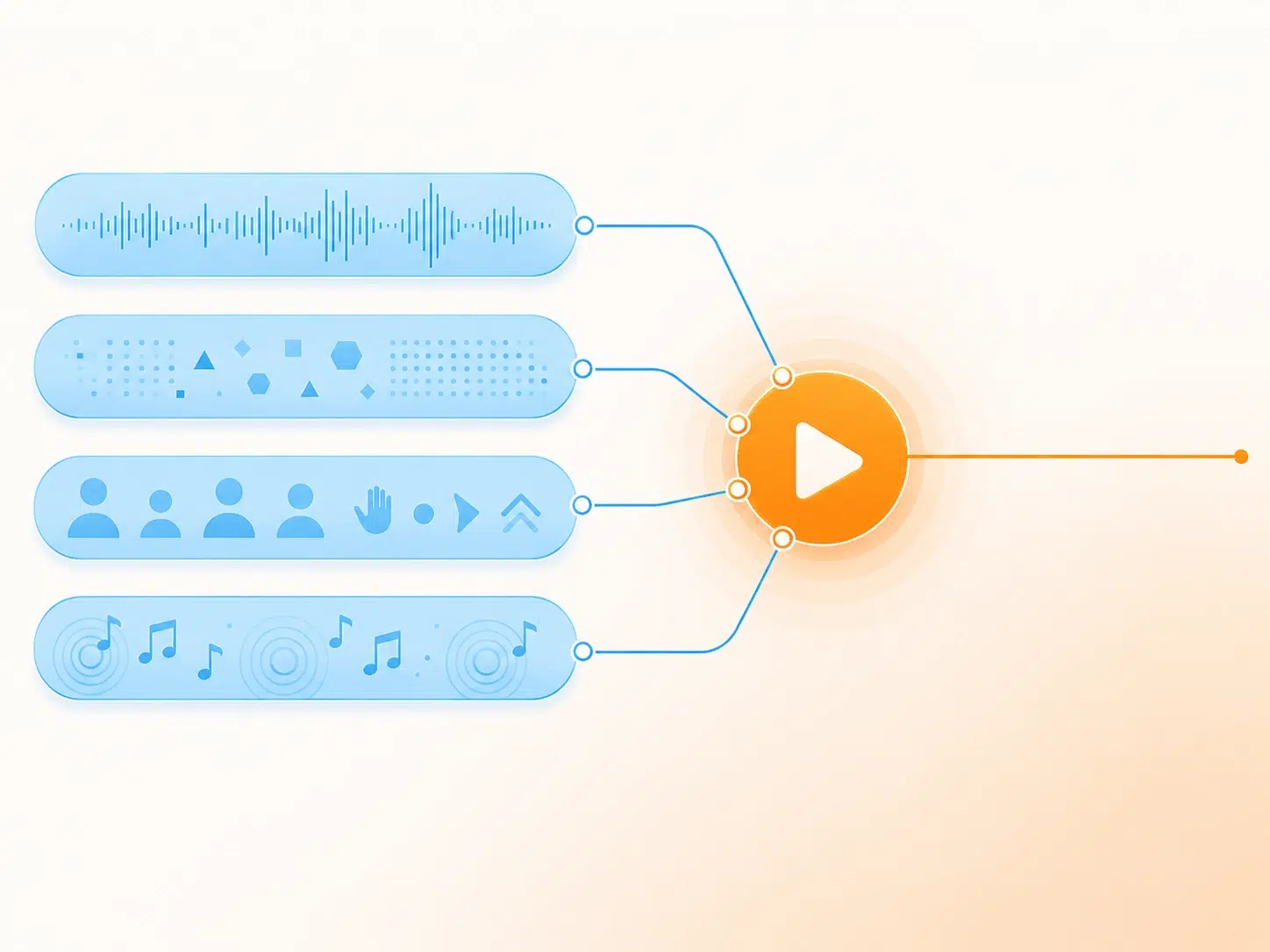
Under the hood, video AI listening is not one model. It is a stack of them working in parallel and then reconciling their answers. 

Speech recognition handles the words. Acoustic models handle the delivery. Vision models handle facial expression, gesture and on-screen text. Audio scene models handle ambient sound and music. Multi-modal classifiers then pull every signal together and check the interpretation against millions of similar examples before anything reaches a dashboard. 
How Video AI Listening Actually Works

When all of those layers agree, confidence is high. When they disagree, as with the sarcastic coffee maker review where the words say one thing and the voice says another, the system flags the mismatch rather than guessing. That is the structural reason video AI listening produces sharper insight than any single-stream tool can match. 

Making that stack run at the scale of TikTok, Instagram and YouTube was a real engineering problem. The Social Voice team walked through that side of the story in their piece on the technical evolution behind video social listening. 

What This Means for Your Brand

Most social listening reports still look the same as they did five years ago. Mention volume, sentiment percentage, top hashtags, trending topics. All useful. All incomplete. 

Now picture the same report informed by video AI listening. You see exactly which product features generate genuine excitement in unboxing videos, not just polite mentions. You know precisely where in the customer journey people get frustrated, with timestamps. You understand which messages resonate emotionally rather than just intellectually. You catch authentic endorsements that never appear in any text-based search because the creator never typed your brand name. 

This is not theoretical. Brands using full-spectrum video analysis are finding conversations they did not know existed. They are spotting issues weeks before they would have escalated into something visible to a text-only tool. They are identifying creators who quietly champion the product without ever being asked. They are making product, messaging and crisis decisions based on what people actually felt, not just what a transcript happened to capture. 

The gap between brands using text-only monitoring and those layering in video AI listening is widening fast. It shows up in product development, in crisis response, in influencer strategy and in the speed at which insight reaches the rooms that matter. 

The Bottom Line

A useful way to think about all of this. Text-based social listening is reading a play. Video AI listening is sitting in the theatre. Same script, two completely different experiences. Most enterprise tools are still handing brand teams the script and asking them to imagine the performance. 

If your current social listening setup is built around captions, hashtags and machine transcripts, it is almost certainly missing the conversations that move the needle. Social Voice runs as an API-first layer alongside the enterprise social listening platforms you already use, adding the voice, visual and contextual signals your existing stack cannot see. Request a demo and we will show you what is being said about your brand inside the video content your dashboard is currently treating as silent. 

30 May 2026
https://socialvoice.ai/wp-content/uploads/2026/05/Inside-the-Signal-What-AI-Actually-Hears-When-It-Listens-to-Social-Video.webp 1000 1000 Robert Hawkes https://socialvoice-ai.stackstaging.com/wp-content/uploads/2025/09/Social-Voice-Blue.webp Robert Hawkes2026-05-30 14:18:072026-05-30 14:24:25Inside the Signal: What AI Actually Hears When It Listens to Social Video

The Iceberg Effect: Video Social Listening Explained

Social Video Intelligence, Social Intelligence, Social Listening

Remember the Titanic. The crew could see the tip of the iceberg. What they could not see was the vast mass waiting beneath the surface. That is exactly what is happening to brands trying to do social listening in a video-first world.

If you are still running your social listening programme on tools that scan text, hashtags and @mentions, you are looking at the tip. The real conversation about your brand is happening inside video, where traditional tools cannot see or hear it. And that hidden iceberg is usually the one that sinks the ship.

This post explains why video social listening has become the blind spot that matters most, the two types of iceberg every brand now needs to watch for, and how an intelligence-led approach can help you see beneath the surface without boiling the ocean.

The scale of the problem

Video is now the dominant form of content on the internet. According to AppLogic Networks (formerly Sandvine), video streaming accounts for the majority of global internet traffic, with YouTube alone leading both app and subscriber volumes across every region. Wyzowl’s 2026 video marketing report found that 89% of consumers say video quality directly affects their trust in a brand, and 63% prefer to learn about a product or service through a short video rather than text, infographics or sales calls.

The implication for brands is simple. If the majority of consumers now express opinions, reviews, complaints and recommendations through video, then any social listening programme that reads only text is capturing a fraction of the signal. And the fraction it misses is growing every quarter.

The two icebergs every brand needs to see

When we talk to brand teams about video social listening, we find it helps to think in terms of two distinct icebergs, one easy to spot and one that is not.

The visible iceberg

These are videos that helpfully include your brand name in hashtags, use @mentions, or tag you directly. Your traditional social listening tools can find them with no trouble. They are polite enough to knock on the door and announce themselves.

This is the world most social listening dashboards were built for, and it is the world most brands are still monitoring. The problem is that it is a smaller and smaller share of what is actually being said.

The hidden iceberg

These are videos where your product appears on screen, your logo flashes by, someone verbally discusses your brand, or your service gets reviewed, but nothing in the metadata gives anything away. No hashtags. No @mentions. No tags. Just pure visual and audio content that your current monitoring systems sail straight past.

A beauty creator mentions your foundation in the middle of a ten-minute tutorial. A tech reviewer compares your product unfavourably against a competitor but calls neither by name in the title. A food blogger films a viral restaurant review in which your branding is clearly visible on the coffee cups.

None of this shows up in metadata. All of it shapes how your brand is perceived. And the hidden iceberg is almost always bigger than the visible one.

Why the 30-hour crisis window is closing faster than ever

PR teams have lived by a rough rule for years: you have roughly 30 hours to identify a potential crisis and respond before the narrative hardens. That window assumes one critical thing. That you actually know the crisis exists.

Now picture the scenario. A TikTok video showing your product failing starts to gain traction. No hashtag. No mention. Just a creator, a camera and an angry consumer. By the time the video surfaces through your customer service inbox, a journalist’s DM or (worst of all) your CEO’s email, it has been viewed two million times and the conversation has moved on without you.

That is not a hypothetical. It is the daily reality of video-first social media. And the 30-hour window now closes in a matter of hours, not days, because videos can go viral before a single piece of written coverage has been published.

The only way to reopen that window is to start monitoring what is actually inside video, not just what surrounds it.

Why traditional social listening tools cannot help

Most enterprise social listening platforms are sophisticated, well-engineered products. Brandwatch, Sprinklr, Meltwater, Talkwalker and their peers have built genuinely impressive technology for ingesting, filtering and visualising text-based social data. None of that is in question.

What they all share, however, is that they were designed in and for the text-first era of social media. Their core models read captions, comments, hashtags and metadata. When they encounter video, they can only read what surrounds the video, not what is inside it.

This is not a failure of engineering. It is a limitation of category. Analysing the inside of a video is a fundamentally different technical problem. It requires computer vision models to understand visual content, automatic speech recognition tuned for casual and multi-accent speech, acoustic analysis to capture tone and emotion, and enough infrastructure to process terabytes of video daily at enterprise scale. Building that in-house is a multi-year undertaking that pulls focus from everything else a listening platform does well.

Which is why the smart money in the industry is not building it in-house. It is integrating specialist partners that have already solved the problem.

The intelligence approach: how to see the iceberg without boiling the ocean

Here is the understandable objection when you first hear about video social listening. Surely it is impossible to watch every video, on every platform, in every language, every day? You would drown in data and burn through budget before lunch.

You are right. And you do not need to.

The answer lies in how intelligence agencies have always worked. They do not read every email or listen to every phone call on the planet. They look for patterns. They combine signals. They use smart filters to identify what deserves deeper attention. Video social listening works the same way.

Before any video is analysed in depth, it can be pre-qualified against layered signals that predict whether it is likely to matter:

  • Influencer reach: who created the video and what is their audience size, engagement rate and historical relevance to your category?
  • Speed of engagement: how quickly is this video gaining traction? A slow burn can be as meaningful as an instant viral hit.
  • Hashtag and topic virality: which tags are being used and are they trending or linked to emerging conversations?
  • Creator networks: is this video part of a wider cluster of creators discussing similar topics at the same time?
  • Topic freshness: is this touching on something new, or revisiting well-worn ground?

When you combine these signals intelligently, something useful happens. You start to see which videos are likely to be icebergs before you have analysed what is actually inside them. You can prioritise your compute budget on the content that matters, stay within spend and still maintain meaningful coverage across the creators and conversations that shape your category.

This is what we mean by the intelligence approach. It is not about watching everything. It is about knowing where to look, using signal to guide attention, and then applying deep inside-video analysis to the content that has earned it.

Why category agility matters

Here is where many brands get caught out. They experience a crisis or a significant conversation in one category (let us say tech reviews) and they double down their monitoring efforts there. But the next challenge rarely reads the same playbook. It emerges from beauty, gaming or fitness creators instead.

The landscape shifts constantly. A fine-tuned video social listening programme needs to cast its net across a wide spectrum of categories, not just the ones that caused problems last time. This is about being proactive rather than reactive, and about building a monitoring system smart enough to adapt to wherever the conversation is actually happening.

The combination of broad category coverage and layered intelligence signals is what separates a genuine video social listening programme from a tool that only monitors what it has been told to look for.

What this means for your brand

If your current social listening setup relies solely on text and metadata, you are not getting a complete picture of how your brand is perceived. You are getting the tip of the iceberg. And in a market where most brand conversations have migrated into video, that tip is shrinking as a share of the whole.

The good news is that closing this gap does not mean ripping out and replacing your existing platform. Social Voice is built as an integration layer that sits alongside your current tools, feeding inside-video intelligence directly into the dashboards and workflows your team already uses. Your text-based listening carries on unchanged. You simply stop being blind to video.

The brands seeing the biggest wins are not the ones with the most tools. They are the ones with the most complete picture. The ones who know, at any given moment, what is being said about them on screen, in voice and in context, and who can act on that knowledge before the conversation hardens.

See beneath the surface

The hidden iceberg is out there right now. Videos about your brand that your current tools cannot see. Some positive, some negative, some neutral. All of them shaping how your brand is perceived.

The question is no longer whether these videos exist. The question is whether you will find them in time to do something about them.

If you would like to see what video social listening could reveal about your brand specifically, we would be happy to show you. Book a short consultation call with the Social Voice team and we will walk you through the conversations your current tools are missing, the signals we would prioritise for your category, and what a proactive monitoring approach could look like in practice.

The icebergs are there. Now you can finally see them coming.

Book a demo with the Social Voice team →

28 April 2026
https://socialvoice.ai/wp-content/uploads/2026/04/The-Iceberg-Effect-Video-Social-Listening-Explained.webp 1000 1000 Robert Hawkes https://socialvoice-ai.stackstaging.com/wp-content/uploads/2025/09/Social-Voice-Blue.webp Robert Hawkes2026-04-28 19:54:572026-04-28 20:01:03The Iceberg Effect: Video Social Listening Explained

Why Enterprise Social Listening Platforms Are Quietly Adding Video Intelligence Partners

Social Video Intelligence, Social Intelligence, Social Listening

Social video intelligence is no longer a nice-to-have in the enterprise social listening category. It is a requirement, and the way the biggest platforms are getting it into their stacks tells you everything you need to know about the economics.

Brandwatch, Sprinklr, Meltwater, Talkwalker and their peers are not short of engineering talent. They are not short of infrastructure, data science teams or capital. And yet, when it comes to analysing what is actually said, shown and meant inside video content, they are all doing the same thing. They are partnering for it rather than building it.

This post explains why that is happening, why the build versus buy maths is more brutal than it first appears, and what it means for any social listening platform still weighing up its options.

The pattern you may have already noticed

If you track the enterprise social listening space closely, the signal is clear. Announcements about video analysis capabilities are increasingly framed as integrations, not product launches. Press releases mention specialist AI partners. Product roadmaps quietly swap “build internal video analysis” for “integrate best-in-class video intelligence.”

This is not an accident. It is a deliberate strategic choice being made by product leaders who have run the numbers on what it would actually cost to own video intelligence end-to-end and decided the maths does not work.

Here is what those numbers look like.

Social video intelligence: a different kind of technical problem

Text-based social listening has matured over 15 plus years. The technology stack is well understood. Sentiment models are refined. Entity recognition is reliable. Infrastructure patterns are established. An engineer joining a listening platform in 2026 inherits a mature discipline with clear best practices.

Video throws all of that out the window.

Start with the compute requirement. Analysing a single minute of video requires processing power roughly equivalent to analysing thousands of text posts. Multiply that across millions of videos uploaded daily across TikTok, Instagram Reels, YouTube Shorts and the long tail of platforms, and you are looking at infrastructure bills that make a CFO’s eye twitch.

Then there is the model complexity. Video intelligence is not one problem, it is a dozen interconnected problems. Each of them needs specialist models, continuous training and constant optimisation:

  • Object detection to identify products, logos and scenes
  • Optical character recognition for on-screen text and graphics
  • Automatic speech recognition tuned for casual, multi-accent, often noisy audio
  • Speaker diarisation to separate multiple voices in the same clip
  • Acoustic analysis for tone, emphasis and emotional prosody
  • Logo and brand visibility measurement
  • Context and scene understanding at the clip level
  • Cross-platform normalisation because TikTok, Instagram and YouTube all behave differently

Each of those requires specialist expertise. And crucially, the models need to work across languages, cultural contexts, lighting conditions, audio qualities and platform-specific formats. What works on a polished YouTube review does not work on a handheld TikTok rant. The performance bar is enterprise-grade or nothing.

The talent problem nobody talks about

Building enterprise-grade social video intelligence means assembling a team of specialists you do not currently have. Computer vision engineers, machine learning operations experts, video codec specialists, audio signal processing engineers and domain experts who understand brand safety and advertising context.

These are not generalist developers. They are niche experts with niche compensation expectations and a job market that favours them, not you.

Most enterprise listening platforms have spent years building world-class teams for text analysis, social data ingestion and dashboard engineering. Pivoting those teams to video means one of two uncomfortable options. Either you retrain your existing engineers on an entirely different discipline, which is slow, risky and demoralising. Or you hire an entirely new vertical of specialists alongside them, which is expensive, culturally disruptive and creates internal competition for resources.

Meanwhile, specialist social video intelligence providers have been doing nothing but video for years. They have already made the hiring mistakes, optimised the models, built the infrastructure and learned the lessons you would be about to learn on your own time and budget.

The speed-to-market reality

Imagine you are the chief product officer at a major listening platform. Your enterprise clients are asking for TikTok and YouTube Shorts video analysis. They want it in their Q4 campaign planning cycle. You have two options.

Option A: launch an internal social video intelligence project. Scope the requirements, hire the specialists, build the infrastructure, train the models, test across edge cases, integrate with your existing product, handle the platform API changes that will inevitably happen mid-build, and launch in 18 to 24 months. Maybe longer if anything goes wrong, which it will.

Option B: partner with a proven video intelligence provider. Scope the integration, connect the API, customise the output for your dashboard, test with a pilot client and launch in three to six months.

Your clients are not going to wait two years. Your competitors might not either. The RFPs coming across your desk right now are specifying video analysis as a requirement, not a nice-to-have, and the ones you lose while you are building will not come back once you finally launch.

This is the calculation that explains the partnership pattern. It is not a failure of ambition. It is strategic clarity.

What platforms gain from social video intelligence partnerships

The argument for partnering is not just about avoiding the build cost. It is about the strategic advantages that come with specialist depth you could not replicate in-house.

Immediate expertise

You get technology built by teams who have been solving video problems for years, not months. Models trained on millions of video examples across every major platform. Edge cases already handled. Accuracy benchmarks already met.

Continuous innovation without internal cost

Your partner’s entire business depends on staying ahead in video AI. They are investing in research and development you do not have to duplicate. When a new platform emerges or an existing one changes its format, they adapt because it is their core focus.

Flexible scaling

You pay for usage rather than maintaining expensive infrastructure for peak loads. When a client runs a major campaign monitoring project, you scale up. When things quieten down, you scale back. No capex, no stranded compute, no dead teams between projects.

Faster adaptation to the platform landscape

When TikTok changes its API or a new short-form video platform emerges, a specialist partner adapts in weeks because it is the only thing they do. An internal team juggling ten other priorities will always be slower.

Strategic risk mitigation

If video analysis does not deliver the return on investment you expected, you can adjust or pivot without massive sunk costs in proprietary technology. You have not bet the company on a capability that may or may not pan out.

What this means for the market

The partnership trend reveals something important about how enterprise software is evolving more generally. The days of monolithic platforms that build everything in-house are ending. The best social listening platforms are becoming excellent orchestrators. They maintain their core strengths in data aggregation, dashboard experience and cross-channel insights, while plugging in specialist capabilities where the depth requirement exceeds the benefit of internal ownership.

Social video intelligence is the first domino. Podcast analysis, livestream monitoring and emerging platform coverage will follow the same pattern, because the underlying logic is the same. Specialists who focus relentlessly on one hard problem will always outperform generalists trying to solve ten problems at once.

For platforms that recognise this early, there is a competitive window. You can get ahead of the RFP cycle, win enterprise deals your competitors are still not equipped to pursue and differentiate on capabilities your clients can actually see in their dashboards next quarter, not in 2028.

For platforms that wait, the window closes. Every quarter you spend debating build versus buy is a quarter your competitors are closing deals you will not win.

The bottom line

The enterprise platforms adding social video intelligence partners are not admitting weakness. They are demonstrating strategic clarity. They understand that competitive advantage in 2026 comes from knowing what to build, what to buy and how to integrate it seamlessly for clients who do not care about the architecture, only the output.

The question is not whether your platform should offer social video intelligence. Your clients are already demanding it, and the ones asking nicely today will be issuing RFP requirements about it next year. The real question is whether you want to spend the next 18 to 24 months and several million dollars building something specialist partners have already perfected.

Social Voice is built as an API-first integration layer that plugs into your existing stack without disruption. No rip and replace. No new dashboards for your clients to learn. Just the missing 95% of brand conversation that currently lives inside video, surfaced in the product you already ship.

Book a call to see what a platform partnership looks like in practice →

9 April 2026
https://socialvoice.ai/wp-content/uploads/2026/04/Social-video-intelligence-build-vs-buy-decision-for-enterprise-social-listening-platforms.webp 1200 1200 Robert Hawkes https://socialvoice-ai.stackstaging.com/wp-content/uploads/2025/09/Social-Voice-Blue.webp Robert Hawkes2026-04-09 15:53:282026-04-09 16:21:28Why Enterprise Social Listening Platforms Are Quietly Adding Video Intelligence Partners

Why Video Listening Is Social Intelligence 2.0

Social Intelligence

How inside-video intelligence [ video listening ] is reshaping social listening and brand strategy.

From Tweets to TikToks: The Evolution of Social Intelligence


More than a decade ago, brands were amazed to discover they could finally track what people were saying about them online. The rise of Twitter transformed marketing from one-way broadcasting into two-way listening. That was Social Listening 1.0—the moment marketers could measure real sentiment, react in real time, and rebuild strategies around audience insight.

Today, we’re standing at another turning point. Except this time, the conversation isn’t written. It’s spoken.

The Shift: Consumers Don’t Type — They Talk


Social behaviour has gone video-first. TikTok, YouTube, and Instagram Reels dominate attention. TikTok videos generate 167% higher engagement than text posts. YouTube is now the second-largest search engine in the world.

Your audience isn’t commenting—they’re conversing on camera.

Yet most brands are still relying on tools built for a text-based internet. Legacy listening stacks read captions, hashtags, and comments. They don’t capture the spoken word, visual context, tone, or emotion inside the content itself.

The result? A vast blind spot in how brands understand their markets.

Learn how Social Voice bridges that gap →

The Blind Spot: What Text-Only Listening Misses


  • Unseen product feedback
    A creator demonstrates a new use case for your product—it’s said aloud but never written down.

  • Trend signals before they trend
    New cultural phrases and behaviours start in video voiceovers months before they appear in captions.

  • Authentic sentiment
    Text hides emotion; tone and expression reveal it.

  • Influencer alignment
    The creators shaping your brand narrative rarely tag you. Without voice analysis, you’ll never know who’s driving perception.

Social Voice case studies show that up to 90% of brand mentions occur inside video, invisible to traditional social listening tools. That’s not a marginal gap—it’s a fundamental data loss.

See how this plays out in our Skin Care Case Study and Brand Safety Case Study.

The Inflection Point: When Listening Has to See and Hear


Every decade brings a transformation in how brands connect with audiences:

  • From offline to e-commerce

  • From desktop to mobile

  • From static analytics to real-time social monitoring

We’re now entering the voice-and-visual era of social intelligence.

Video listening doesn’t replace text-based tools—it completes them. By combining AI-powered voice and visual analysis, brands can decode the full context of content: what’s said, what’s shown, and how audiences react.

It’s no longer enough to monitor mentions. You need to understand moments.

What Leading Brands Are Doing Differently


The most advanced marketing and insight teams are already building video intelligence into their workflows:

  • Brand safety — detecting risk, toxicity, and compliance issues before they escalate.

  • Trend detection — surfacing emerging topics up to 14 months earlier than metadata.

  • Influencer validation — auditing a creator’s entire video history to ensure alignment with brand values.

  • Competitive intelligence — tracking visibility of logos, products, and sentiment across thousands of videos.

Brands like Coca-Cola and Unilever are already leveraging inside-video analysis to uncover unseen insights and act faster.

Want to see how it works in practice? Explore our Brand Safety Case Study →

From Data to Decision: Why It Matters


Video listening gives you what text never could—context. The voice inflection, the background, the object on screen, the emotional tone—all captured and quantified.

It turns the world’s most unstructured data source into actionable intelligence:

  • Earlier insights for product and campaign planning

  • Faster response in crisis and reputation management

  • Deeper empathy for how audiences feel, not just what they type

  • Evidence-based storytelling built on authentic consumer language

This is not a nice-to-have feature. It’s the foundation of how modern brands will understand culture, competitors, and consumers.

The Future of Social Intelligence Is Video


Your customers are already talking—literally—about your products, your competitors, and your category. The only question is whether you can hear them.

Social Voice helps global brands, agencies, and platforms capture those conversations—analysing voice, visuals, and context inside video to deliver a complete view of social truth.

Meet the team behind the technology →

Discover our story →

See What You’ve Been Missing


Ready to unlock the full conversation? Request a Demo and see how Social Voice transforms invisible video data into actionable intelligence.

5 January 2026
https://socialvoice.ai/wp-content/uploads/2025/10/Social-Intelligence-2.0.webp 1000 1000 Robert Hawkes https://socialvoice-ai.stackstaging.com/wp-content/uploads/2025/09/Social-Voice-Blue.webp Robert Hawkes2026-01-05 12:10:102026-01-08 10:36:22Why Video Listening Is Social Intelligence 2.0

Beyond the Transcript: How Audio Analysis Unlocks the Consumer Sentiment Traditional Tools Miss

Social Intelligence

The Hidden Meaning Behind Every Word


You’ve probably seen it happen. A customer writes “Great job” in a survey, and your sentiment dashboard lights up green. But what if that same customer said it with a sigh, an eye-roll, or a tone dripping with frustration?

That’s the problem with text-only analysis — it captures words, not emotions. And in doing so, it leaves up to 70% of human meaning unheard.

Traditional transcript tools were built for what people say. But real insight lives in how they say it — in tone, pace, rhythm, and hesitation.

See how Social Voice helps brands capture emotion inside video →

The Limit of Text-Based Understanding


When speech becomes text, most of its context disappears. Linguists have known this for decades — the human voice carries layers of emotional information that vanish the moment it’s flattened into words.

Think about the last time you misread someone’s tone in an email. Now imagine building your brand strategy, your customer research, or your product roadmap on that same misunderstanding.

That’s what happens when businesses rely solely on transcripts of customer calls, focus groups, or social content.

What Audio Analysis Really Reveals


Modern audio intelligence goes far beyond speech-to-text. It doesn’t just document language — it decodes emotion.

  • Vocal prosody uncovers emotional states through pitch, rhythm, and pace. A rising pitch at the end of a “positive” statement often signals doubt.

  • Acoustic intensity reveals genuine enthusiasm or frustration — measurable differences in energy and frequency.

  • Temporal patterns expose hesitation or discomfort that text tools erase entirely.

These subtle cues separate polite feedback from powerful truth.

In brand tracking, customer service, or product research, this distinction can mean catching risk, identifying innovation, or predicting churn — weeks before the data appears in surveys or dashboards.

Turning Speech into Sentiment Science


Audio analysis platforms use machine learning models trained on thousands of hours of human speech to decode the patterns text can’t see.

They measure jitter and shimmer — microvariations in voice linked to stress or authenticity. They detect synchrony in conversations that reveals agreement or tension. They interpret the sound of emotion as data, creating what text-only systems can’t: genuine emotional intelligence.

A transcript is a skeleton. Audio analysis gives you the living, breathing human story.

From Data to Decisions


Adding audio analysis to your research stack doesn’t replace text-based tools — it completes them.

Text reveals what’s discussed. Audio uncovers how people feel while discussing it. Together, they give you a multidimensional understanding of customer sentiment — the “what” and the “why” behind behaviour.

Brands and agencies using this hybrid approach are already seeing:

  • More accurate sentiment detection.

  • Early identification of brand or product risk.

  • Deeper understanding of emotional triggers behind purchase decisions.

That’s not just data — it’s actionable empathy.

See how Social Voice empowers Brands & Agencies →

The Competitive Edge of Emotion


Every customer interaction, from a service call to a TikTok review, contains emotion that text can’t show. The companies that hear it will understand their audiences sooner — and act faster.

If your brand is sitting on hours of recorded calls, interviews, or feedback sessions, you’re sitting on a goldmine of insight waiting to be decoded.

The future of consumer understanding isn’t written — it’s spoken.

Request a Demo →

30 October 2025
https://socialvoice.ai/wp-content/uploads/2025/07/Beyond_The_Transcript.webp 1024 1024 Rory O Kane https://socialvoice-ai.stackstaging.com/wp-content/uploads/2025/09/Social-Voice-Blue.webp Rory O Kane2025-10-30 18:50:202026-01-08 10:52:51Beyond the Transcript: How Audio Analysis Unlocks the Consumer Sentiment Traditional Tools Miss

Why Long-Form Review Videos Are Gold for Product R&D

Social Intelligence

The Untapped Goldmine of Consumer Insight


There’s a treasure trove of product intelligence hiding in plain sight — and most R&D teams are walking right past it.

We’re talking about long-form review videos. Not the 30-second TikToks or quick Instagram Reels, but deep-dive YouTube reviews where creators spend 20, 30, even 45 minutes dissecting every detail of a product.

This isn’t entertainment — it’s authentic, unfiltered consumer research published daily at scale. And the brands that learn to listen will gain a massive head start in understanding what customers really want.

See how Social Voice helps brands extract insight from inside video →

The Authenticity Advantage


Review creators have everything riding on honesty. Their credibility — and income — depend on trust. That means their feedback carries a level of candour rarely seen in traditional research.

These creators don’t sugarcoat flaws or gloss over frustrations. They test, compare, and analyse with the same rigour as a product engineer, but with one critical difference: they’re doing it from the customer’s point of view.

Their videos reveal genuine reactions — the tone, emotion, and context that surveys and focus groups filter out.

Learn how Social Voice decodes authentic audience sentiment →

The Automotive Industry’s Blind Spot


Take automotive as an example. Car manufacturers make design decisions years before a model hits the market. Yet, while engineers are finalising 2028 prototypes, creators are already posting detailed breakdowns of 2024 releases — highlighting every strength, flaw, and missed opportunity.

“I love how Brand X nailed their infotainment system — wish Brand Y would copy that.”

“These seat controls are so unintuitive compared to the competition.”

“How has no one solved this problem yet?”

These aren’t random opinions. They’re timestamped case studies backed by engagement metrics — likes, comments, and millions of views showing exactly which features resonate (or frustrate) consumers most.

Explore our Skin Care Case Study →

The Expert Creators Hiding in Plain Sight


Many long-form reviewers aren’t casual consumers — they’re experts. They’ve tested hundreds of products, understand the competitive landscape, and know what innovations actually matter.

Their feedback is a living archive of product evolution. Track it over time and you’ll see how preferences shift, which features gain traction, and where competitors repeatedly miss the mark.

For R&D teams, that’s an instant roadmap of what to prioritise next.

Discover how Social Voice transforms voice and video into R&D insight →

A Weekly Habit That Transforms Product Development


Here’s a challenge: make long-form video review analysis a weekly ritual in your R&D process.

Ask:

  • What are creators saying about your newest release?

  • How are they comparing you to competitors?

  • Which features generate delight — or frustration?

  • What recurring phrases or behaviours are emerging?

This isn’t research that takes three months or six figures. It’s real-time, authentic feedback — available today, at zero cost beyond curiosity.

The Competitive Edge of Listening Differently


The companies that master this practice will build faster, design smarter, and launch products more aligned with real-world needs.

While competitors rely on 18-month-old focus group data, these brands will be mining current conversations — watching, listening, and adapting in real time.

Because every week, the internet publishes another focus group — on camera.

The Future of Product R&D Is Already on YouTube


Every video review is a data point. Every pause, tone change, and expression is a signal. Collectively, they form a living map of consumer truth that most R&D teams haven’t begun to explore.

The insights are there. The only question is whether you’re listening.

Ready to turn creator content into your next competitive advantage? Let’s talk.

Request a Demo →
Discover Our Story →

30 August 2025
https://socialvoice.ai/wp-content/uploads/2025/07/WHy_Longform_Reviews.webp 1024 1024 Rory O Kane https://socialvoice-ai.stackstaging.com/wp-content/uploads/2025/09/Social-Voice-Blue.webp Rory O Kane2025-08-30 22:08:402026-01-08 10:53:12Why Long-Form Review Videos Are Gold for Product R&D

The Technical Evolution: How AI and Speech Recognition Are Finally Making Video Social Listening Scalable

Social Intelligence

From Text to Talking: The New Era of Social Listening


For years, social listening lived in a text-only world. Brands could track mentions, analyse sentiment, and measure buzz across tweets, posts, and comments — but video remained a black box.

It wasn’t that marketers didn’t want to analyse what people were saying in videos — they simply couldn’t. The content was trapped behind layers of unstructured data: voice, visuals, and motion. The cost and complexity of analysing millions of videos made it nearly impossible.

Until now.

Recent breakthroughs in AI, speech recognition, and computer vision have changed everything. What was once a technical wall is now a scalable system — finally making video social listening both possible and practical.

See how Social Voice helps brands capture intelligence from inside video →

The Speech Recognition Breakthrough


Automatic Speech Recognition (ASR) isn’t new — you use it every time you talk to Siri or dictate a message. But enterprise-grade ASR for social content? That’s a different story.

The challenge was always real-world chaos: background noise, overlapping voices, regional accents, slang, and the low-quality audio of smartphone clips.

That’s where transformer-based models like OpenAI’s Whisper and Google’s USM changed the game. Trained on millions of hours of diverse speech, they can now handle:

  • Accented and informal language.

  • Background noise and ambient sound.

  • Overlapping dialogue and mixed speakers.

Accuracy rates above 95% mean that spoken data is now analysable at scale — the point where video finally becomes measurable, searchable, and meaningful.

Learn how Social Voice integrates advanced speech models into platform workflows →

Understanding Context: The Power of Language Models


Transcribing speech is only half the battle. Understanding it — tone, meaning, emotion — is where large language models (LLMs) come in.

Unlike older keyword-based systems, LLMs read between the lines. They interpret sarcasm, slang, and cultural nuance. They know that “this product is literally fire” in a TikTok doesn’t mean a recall risk.

This semantic understanding lets brands track:

  • Product mentions hidden inside long-form reviews.

  • Competitive comparisons without explicit tags.

  • Pain points and feature requests in casual conversation.

  • Emerging trends long before they hit captions.

It’s a leap from basic sentiment to real emotional intelligence.

See this shift in action with our Skin Care Case Study →

Seeing the Whole Picture: Computer Vision Joins the Conversation


Video listening isn’t just about what’s said — it’s about what’s shown.

Modern computer vision models can now detect products, logos, packaging, and brand presence inside video frames with remarkable precision.

If your product appears in a “What’s in my bag?” video, a grocery haul, or a creator’s kitchen — even for three seconds — these systems see it.

And when combined with voice and text analysis, you get a multi-modal understanding of context:

  • Who’s speaking.

  • What’s being said.

  • What’s visible on screen.

It’s the difference between tracking mentions and seeing your brand’s real-world footprint.

Explore our Brand Safety Case Study →

Scalability: The Final Barrier Falls


Even a few years ago, processing this much data was cost-prohibitive. One hour of video equals 86,000 frames, plus audio and metadata. Multiply that by millions of uploads, and you hit a computational wall.

Today, GPU acceleration and cloud AI infrastructure have changed the math. Services like AWS, Google Cloud, and Azure make it possible to analyse video at scale, in near real-time, for a fraction of the cost.

What used to take hours now takes minutes. What once cost thousands now costs dollars.

Scalable video social listening is no longer theoretical — it’s happening now.

Meet the team powering this innovation →

Why It Matters for Brands Right Now


Social media has already gone video-first:

  • TikTok drives trends.

  • YouTube is the world’s second-largest search engine.

  • Instagram prioritises Reels.

  • Even LinkedIn is boosting video engagement.

If your brand’s listening strategy still focuses on text, you’re missing most of the conversation.

The creators shaping sentiment? They’re speaking on camera.
The authentic reviews driving purchases? They’re filmed, not typed.
The early signals of market shifts? They appear in tone, not text.

AI-driven video analysis lets brands finally hear those signals — accurately, at scale, and in context.

Discover how Social Voice empowers Brands & Agencies to decode video insight →

What’s Next: The Future of Video Intelligence


The next generation of AI is already building on this foundation:

  • Emotion detection that identifies trust, hesitation, or delight.

  • Trend forecasting predicting which topics will go viral before they peak.

  • Cross-platform narrative tracking to follow stories as they move from TikTok to YouTube to podcasts.

  • Synthetic media detection to spot AI-generated or deepfake content.

The brands adopting video-first listening now are building the intelligence muscle that will define tomorrow’s marketing leaders.


Request a Demo →

11 July 2025
https://socialvoice.ai/wp-content/uploads/2025/07/The-Technical-Evolution-.webp 1024 1024 Rory O Kane https://socialvoice-ai.stackstaging.com/wp-content/uploads/2025/09/Social-Voice-Blue.webp Rory O Kane2025-07-11 23:02:002026-01-08 10:53:40The Technical Evolution: How AI and Speech Recognition Are Finally Making Video Social Listening Scalable

The Dark Data Problem: Why 95% of Brand Mentions Are Invisible to Traditional Social Listening

Social Intelligence

The Hidden Conversations Brands Can’t See


Your brand is being talked about right now — thousands of times — but you’re only hearing a whisper of that conversation.

Traditional social listening tools have created a massive blind spot, and the numbers are staggering. While companies invest millions to monitor reputation, they’re missing up to 95% of actual brand mentions across social platforms.

The reason? An outdated reliance on text-based monitoring in a world that’s gone fully visual and video-first.

See how Social Voice helps brands uncover hidden video mentions →

The Great Migration to Video


Social media has changed more in the last five years than in the previous fifteen. What was once a text-driven environment is now dominated by video.

  • Video accounts for over 80% of all internet traffic.

  • TikTok users upload 34 million videos every day.

  • Instagram Reels generate 140 billion daily plays.

  • YouTube sees 500 hours of video uploaded every minute.

Even LinkedIn — long a text-first platform — reports that video content drives 5x more engagement than posts without it.

Consumers aren’t typing “I love this product” anymore. They’re showing it, demonstrating it, reacting to it — on camera.

From unboxings and tutorials to comparisons and reviews, your brand’s story is being told in video, not text.

Where Traditional Social Listening Fails


Most listening platforms were built for a different era — one where words ruled the feed. They still rely on scanning text posts, comments, hashtags, and metadata.

But here’s the truth: most video mentions never appear in text form.

  • A creator holds your product on camera without naming it.

  • A customer discusses your brand in a voiceover with no caption.

  • Your logo appears in the background of a lifestyle video.

  • A competitor mentions your product during a review — but only verbally.

Each of those moments goes unseen by text-based tools. The result is a vast pool of “dark data” — valuable brand insight that exists but remains invisible.

Discover how Social Voice integrates with Social Listening Platforms to fill that gap →

Quantifying the 95% Blind Spot


Recent cross-platform studies comparing text-only analysis to full video intelligence show how big the gap really is:

  • Text-based tools capture just 5–15% of total brand mentions.

  • On TikTok and Instagram, that number drops close to zero.

  • Even on YouTube, most mentions happen inside the video — not in captions or comments.

For consumer-facing industries, the scale of this invisibility is staggering:

  • Beauty and fashion: up to 95% of mentions occur in visual formats.

  • Tech and electronics: products are reviewed on camera far more than in writing.

  • Food and beverage: brands feature in cooking, lifestyle, and event videos with no tagged mentions.

These aren’t marginal oversights — they’re missing the majority of the conversation.

Explore our Skin Care Case Study to see video intelligence in action →

The Cost of Invisibility


Operating with a 95% blind spot isn’t just an analytics issue — it’s a strategic risk that touches every aspect of brand management.

Crisis detection delays.
By the time a negative video goes viral, text-based tools are days behind. Early visibility can mean the difference between control and damage.

Missed influencer partnerships.
Micro and nano creators mention brands organically in video, often without tags. Those hidden advocates are your next high-impact collaborators.

Incomplete competitive intelligence.
You can’t benchmark what you can’t see. Competitor comparisons and category discussions in video content remain untracked.

Lost customer insight.
Video reviews reveal tone, emotion, and authenticity text can’t capture — real feedback that drives better products and messaging.

Skewed sentiment analysis.
Text sentiment alone is deceptive. A sarcastic “great” reads positive in text, but negative in tone. Video adds the emotional truth.

See how Social Voice helps brands mitigate risk and surface opportunity →

Why Most Platforms Haven’t Caught Up


Text analysis is easy. Video analysis isn’t.

Comprehensive video listening requires:

  • Computer vision to identify logos, products, and visual context.

  • Speech recognition to transcribe spoken content.

  • Natural language processing (NLP) to interpret meaning and tone.

  • Massive computational scale to process millions of videos efficiently.

Most legacy social listening tools weren’t built for this. Retrofitting these capabilities means rebuilding their entire tech stack — something few are willing to invest in.

The result? A generation of “modern” tools that are, in reality, text engines in a video-first world.

The Solution: Illuminating Dark Data


The technology to solve this problem already exists. Advanced platforms now combine computer vision, voice analysis, and AI to detect brand mentions inside video — not just around it.

They can identify:

  • Products, even when unnamed.

  • Logos, even when partially visible.

  • Tone and emotion from voice and facial expression.

  • Contextual sentiment from visuals and sound.

This creates a complete picture of how your brand is perceived, discussed, and displayed across social platforms.

Learn how Social Voice delivers this capability for global brands →

The Path Forward


The dark data problem isn’t a minor reporting issue — it’s a visibility crisis.

The brands winning the next decade will be those that embrace full-spectrum listening — where text, voice, and visual data combine to reveal the truth of consumer perception.

Every day you delay adopting video social listening, 95% of your brand’s story continues unseen.

Ready to hear what you’ve been missing?

Request a Demo →

11 May 2025
https://socialvoice.ai/wp-content/uploads/2025/07/Dark_Data.webp 1024 1024 Rory O Kane https://socialvoice-ai.stackstaging.com/wp-content/uploads/2025/09/Social-Voice-Blue.webp Rory O Kane2025-05-11 10:33:322025-10-16 12:27:10The Dark Data Problem: Why 95% of Brand Mentions Are Invisible to Traditional Social Listening

TikTok, Instagram Reels, and YouTube Shorts: Why Video-First Platforms Require Video-First Analytics

Social Intelligence

The New Reality of Social Performance


The numbers don’t lie. Short-form video now dominates social media.

  • TikTok users spend an average of 95 minutes per day on the app.

  • Instagram Reels account for over 20% of all time spent on the platform.

  • YouTube Shorts rack up 70 billion daily views.

If your brand isn’t showing up in these feeds, you’re effectively invisible to a massive portion of your audience.

But here’s the problem: most analytics tools were built for a different era.

See how Social Voice helps brands measure what traditional tools miss →

The Old Playbook Doesn’t Work Anymore


Legacy social analytics tools were designed for a world of posts and photos — not for short-form video ecosystems powered by algorithms and micro-signals.

They still track likes, comments, and shares. They still measure engagement based on static content principles. But they fail to reflect how audiences actually consume video.

Using traditional metrics to evaluate TikTok or Reels performance is like trying to measure ocean depth with a ruler.

Why Video-First Analytics Are Different


Video-first platforms operate on entirely new behavioural models. Every scroll, pause, and replay tells the algorithm what matters.

TikTok measures watch time, replays, and sound engagement.
Instagram Reels prioritises completion rate and retention curves.
YouTube Shorts analyses viewer drop-offs and rewatch behaviour.

These signals determine whether your content reaches 500 people or 5 million. To succeed, your analytics need to speak the same language.

The Metrics That Actually Matter


Modern video analytics track signals that legacy tools miss entirely:

  • Completion rate & watch time — measure whether your hook works and if people stay until the end.

  • Rewatch & loop rate — show how compelling your content really is.

  • Sound-on rates — reveal how well your audio strategy converts scrollers into engaged viewers.

  • Traffic sources — highlight whether discovery is happening via hashtags, the For You Page, or shares.

  • Follower vs. non-follower views — indicate if you’re expanding reach or just talking to your existing audience.

Data without context is noise. Video-first analytics interpret why performance happens — not just what happened.

When Real-Time Becomes Non-Negotiable


Trends on TikTok move at lightning speed. A video can go viral in hours, and the opportunity to respond or replicate can vanish just as quickly.

By the time a legacy analytics tool updates its dashboard, the trend has already moved on.

Video-first analytics must be real-time — giving you visibility into what’s working now, so you can act before your competitors do.

The Cross-Platform Challenge


Most brands repurpose their content across multiple platforms — TikTok, Instagram Reels, YouTube Shorts, even LinkedIn video.

But each one measures success differently. Native dashboards are inconsistent, making cross-platform comparison nearly impossible.

Video-first analytics consolidate these fragmented insights into one cohesive view — revealing where your content truly performs best and where it needs refinement.

Discover how Social Voice helps unify cross-platform analytics for Brands & Agencies →

It’s Not Just About Better Dashboards


Video-first analytics go beyond prettier graphs. They deliver strategic intelligence:

  • Why did one video outperform another with similar content?

  • Which hooks, topics, and posting times drive audience growth?

  • How can your creative team replicate success in real time?

These aren’t vanity insights — they’re actionable signals that drive creative optimisation and audience expansion.

The Risk of Staying Legacy


Brands clinging to traditional analytics are flying blind in a video-first world. They’re missing trend windows, misreading performance, and losing creative edge to competitors who have already upgraded.

Those using video-first analytics are learning faster, reacting faster, and winning faster — because they’re working with a complete picture.

The Bottom Line


The shift to short-form video isn’t slowing down. Every quarter, the algorithms evolve — and so do the expectations for data sophistication.

If you’re still measuring video through a static lens, you’re not seeing reality.

The platforms have evolved. Your analytics should too.

Ready to see what you’ve been missing?

Discover Our Story →

11 April 2025
https://socialvoice.ai/wp-content/uploads/2025/07/Why-Video-First-Platforms.webp 1024 1024 Rory O Kane https://socialvoice-ai.stackstaging.com/wp-content/uploads/2025/09/Social-Voice-Blue.webp Rory O Kane2025-04-11 12:09:162025-10-16 12:28:22TikTok, Instagram Reels, and YouTube Shorts: Why Video-First Platforms Require Video-First Analytics

Pages

  • About
  • Blog
  • Case Study – Brand Safety
  • Case Study – Skin Care
  • Cookie Policy (AU)
  • Cookie Policy (BR)
  • Cookie Policy (CA)
  • Cookie Policy (EU)
  • Cookie Policy (UK)
  • Cookie Policy (ZA)
  • Disclaimer
  • Imprint
  • Investors
  • Opt-out preferences
  • Our People
  • Privacy Statement (AU)
  • Privacy Statement (BR)
  • Privacy Statement (CA)
  • Privacy Statement (EU)
  • Privacy Statement (UK)
  • Privacy Statement (US)
  • Privacy Statement (ZA)
  • Request Demo
  • Social Listening Platforms Integration
  • Social Video Intelligence for Brands and Agencies
  • Social Voice
  • Video Insights Co-Pilot

Categories

  • Authenticity
  • Social Intelligence
  • Social Listening
  • Social Strategy
  • Social Video Intelligence
  • Uncategorised

Archive

  • May 2026
  • April 2026
  • January 2026
  • December 2025
  • November 2025
  • October 2025
  • September 2025
  • August 2025
  • July 2025
  • June 2025
  • May 2025
  • April 2025

Solutions

  • Social Video Intelligence for Brands and Agencies
  • Social Listening Platforms Integration

Resources

  • Request Demo
  • Our Story
  • Our People
  • Unmuted [ The Blog ]
  • Chrome Extension
  • Case Study – Skin Care
  • Case Study – Brand Safety
  • Disclaimer
  • Cookie Policy
  • Privacy Statement

Socials

  • LinkedIn

Across Major Platforms

© Copyright - Social Voice | website & marketing by Method Marketing
Scroll to top Scroll to top Scroll to top
Social Voice
Manage Consent
To provide the best experiences, we use technologies like cookies to store and/or access device information. Consenting to these technologies will allow us to process data such as browsing behaviour or unique IDs on this site. Not consenting or withdrawing consent, may adversely affect certain features and functions.
Functional Always active
The technical storage or access is strictly necessary for the legitimate purpose of enabling the use of a specific service explicitly requested by the subscriber or user, or for the sole purpose of carrying out the transmission of a communication over an electronic communications network.
Preferences
The technical storage or access is necessary for the legitimate purpose of storing preferences that are not requested by the subscriber or user.
Statistics
The technical storage or access that is used exclusively for statistical purposes. The technical storage or access that is used exclusively for anonymous statistical purposes. Without a subpoena, voluntary compliance on the part of your Internet Service Provider, or additional records from a third party, information stored or retrieved for this purpose alone cannot usually be used to identify you.
Marketing
The technical storage or access is required to create user profiles to send advertising, or to track the user on a website or across several websites for similar marketing purposes.
  • Manage options
  • Manage services
  • Manage {vendor_count} vendors
  • Read more about these purposes
View preferences
  • {title}
  • {title}
  • {title}
Social Voice
Manage Consent
To provide the best experiences, we use technologies like cookies to store and/or access device information. Consenting to these technologies will allow us to process data such as browsing behaviour or unique IDs on this site. Not consenting or withdrawing consent, may adversely affect certain features and functions.
Functional Always active
The technical storage or access is strictly necessary for the legitimate purpose of enabling the use of a specific service explicitly requested by the subscriber or user, or for the sole purpose of carrying out the transmission of a communication over an electronic communications network.
Preferences
The technical storage or access is necessary for the legitimate purpose of storing preferences that are not requested by the subscriber or user.
Statistics
The technical storage or access that is used exclusively for statistical purposes. The technical storage or access that is used exclusively for anonymous statistical purposes. Without a subpoena, voluntary compliance on the part of your Internet Service Provider, or additional records from a third party, information stored or retrieved for this purpose alone cannot usually be used to identify you.
Marketing
The technical storage or access is required to create user profiles to send advertising, or to track the user on a website or across several websites for similar marketing purposes.
  • Manage options
  • Manage services
  • Manage {vendor_count} vendors
  • Read more about these purposes
View preferences
  • {title}
  • {title}
  • {title}