Inside the Signal: What AI Actually Hears When It Listens to Social Video
Most brands have spent the last decade training themselves to think about AI as something that reads. It scans posts, ranks comments, pulls sentiment scores from text. That mental model worked when conversations lived in tweets and reviews. It does not work anymore. Video AI listening is now the layer doing the heavy lifting, and it processes something fundamentally different to anything a text-based tool can see.
The shift is not subtle. When AI processes a TikTok, an Instagram Reel or a YouTube video, it is not just transcribing the words. It is reading the speaker, the setting, the on-screen visuals and the way every one of those signals lines up with the others. That combined read is where brand truth actually lives, and it is the reason most enterprise social listening dashboards are still showing you a fraction of the conversation.
The Words Are Not the Message
Start with what looks obvious. A creator posts a video reviewing your product. “This coffee maker is amazing,” they say. A transcript tags that as positive sentiment, and your dashboard ticks up by one. Job done.
Except that exact sentence can mean five completely different things depending on how it is delivered. Rising pitch with accelerated pace is real excitement. The same words in a flat monotone is sarcasm. A breathy half-laugh on the word “amazing” is performative. A tired delivery at the end of a long unboxing is resignation. The words have not changed. The meaning is opposite.
Video AI listening reads the delivery, not just the words. The system is not asking what the creator said. It is asking what the creator meant, and how strongly they meant it. The full mechanics of the audio layer are a topic in their own right, so the rest of this post focuses on the layers that sit on top.
For a closer look at the acoustic layer specifically, the Social Voice piece on how audio analysis unlocks consumer sentiment that traditional tools miss goes deeper on the vocal prosody and acoustic intensity side of the pipeline.
Building the Emotional Timeline
Vocal tone is only the first layer. The next layer is what researchers call paralinguistic features, the non-word elements that carry most of the emotional weight in human communication.
Picture a creator doing an unboxing. Video AI listening tracks vocal energy across the entire clip, mapping the emotional arc from start to finish. That sharp intake of breath when they first see the product is captured. The slight tremor of excitement when they describe the texture is captured. The half-second hesitation when they encounter the fiddly bit of the setup is flagged. The drop in energy when they realise something is missing is logged with a timestamp.

The output is something far more useful than a sentiment score. You get an emotional timeline. A dynamic map of exactly when and how strongly different feelings appear inside a single piece of content. You can see the precise second delight tips into confusion. You can see the moment frustration gives way to satisfaction.
For a brand team, that is the difference between knowing a video was “broadly positive” and knowing the customer loved the product but was annoyed by the packaging at minute one, twenty seconds in. One of those insights changes a product decision. The other gets filed and forgotten.
Context Is the Hidden Layer
Even emotional timelines are not the full picture. The most useful layer of video AI listening is contextual understanding.
The system needs to know the difference between “I’m dying” in a comedy skit and “I’m dying” in a health complaint. It needs to recognise that “sick” is positive when a skater lands a trick and negative in a wellness review. It needs to detect whether background music is upbeat or sombre, whether two speakers are agreeing or arguing, and whether ambient sound suggests a studio, a kitchen or a car.
That contextual processing happens through multi-modal analysis. The system considers visual elements such as facial expressions, on-screen text and physical setting. It processes audio components like speech, music and ambient sound. It tracks temporal patterns, watching how everything shifts across the duration of the video. The result is a complete situational read, not just a transcript.
This matters because human meaning is contextual. The same sentence in a different room with different background sound from a different speaker can carry an entirely different message. A tool that flattens all of that into a single sentiment label is not analysing video. It is guessing.
Why Video AI Listening Matters Now
Here is the hard reality most marketing teams are now facing. Video has eaten the social internet. TikTok, Instagram Reels, YouTube Shorts, podcast clips and live streams are where brand conversations actually happen. The figures vary depending on the source, but every credible estimate puts video at well over eighty per cent of social content consumed by the average user.
Text-based monitoring is essentially flying blind through that landscape. A traditional tool might catch the video if a creator adds a caption or a hashtag, but it is missing the vast majority of authentic, unscripted content. The product review posted as a sixty-second TikTok with no caption is invisible. The podcast mention of your brand is gone. The Instagram Reel where someone raves about the product without typing your name is lost.
Tools built for a text-first internet are not just limited any more. They are becoming structurally obsolete. The conversation has moved. The infrastructure has not.
How Video AI Listening Actually Works
Under the hood, video AI listening is not one model. It is a stack of them working in parallel and then reconciling their answers.
Speech recognition handles the words. Acoustic models handle the delivery. Vision models handle facial expression, gesture and on-screen text. Audio scene models handle ambient sound and music. Multi-modal classifiers then pull every signal together and check the interpretation against millions of similar examples before anything reaches a dashboard.
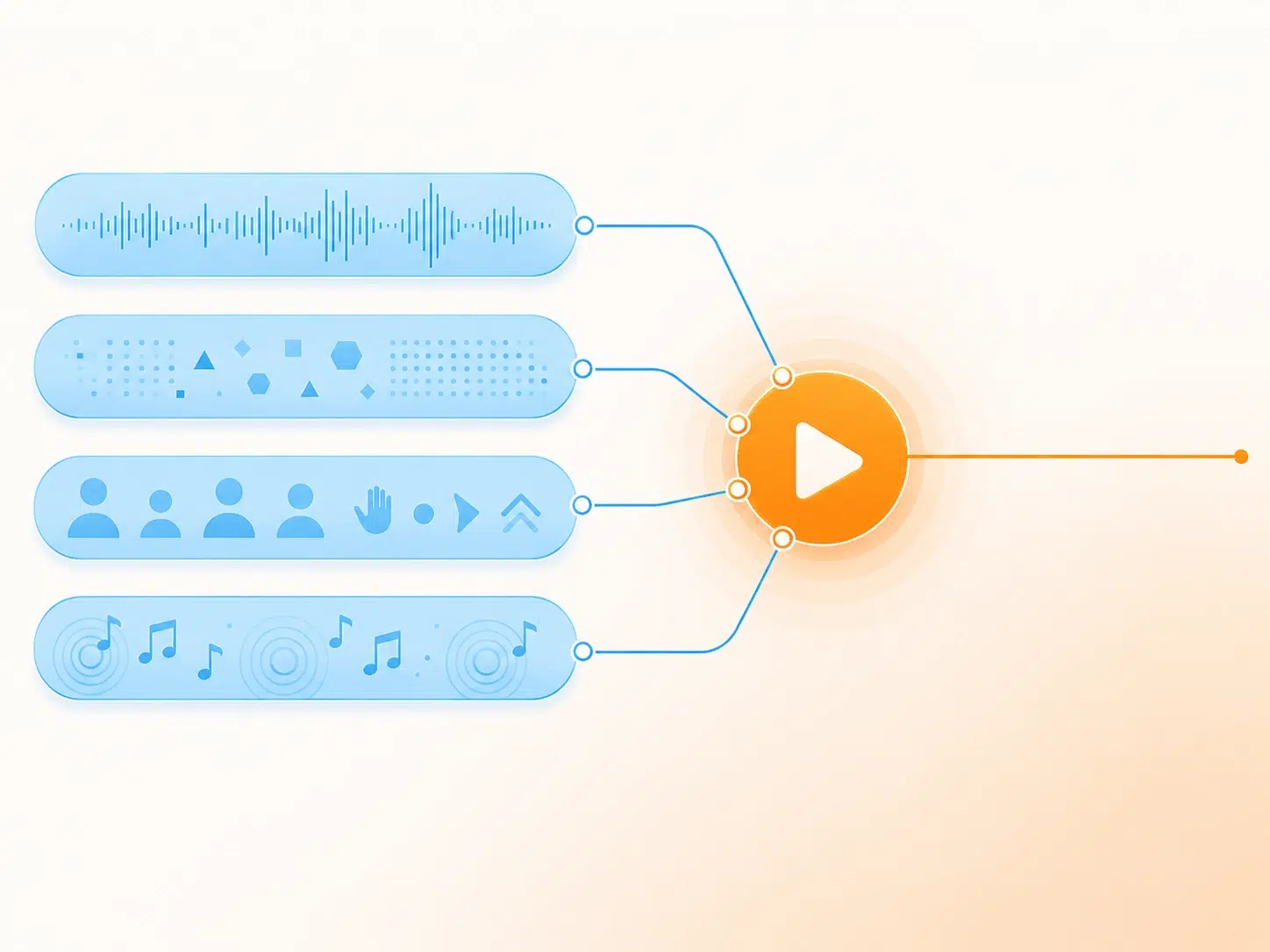
When all of those layers agree, confidence is high. When they disagree, as with the sarcastic coffee maker review where the words say one thing and the voice says another, the system flags the mismatch rather than guessing. That is the structural reason video AI listening produces sharper insight than any single-stream tool can match.
Making that stack run at the scale of TikTok, Instagram and YouTube was a real engineering problem. The Social Voice team walked through that side of the story in their piece on the technical evolution behind video social listening.
What This Means for Your Brand
Most social listening reports still look the same as they did five years ago. Mention volume, sentiment percentage, top hashtags, trending topics. All useful. All incomplete.
Now picture the same report informed by video AI listening. You see exactly which product features generate genuine excitement in unboxing videos, not just polite mentions. You know precisely where in the customer journey people get frustrated, with timestamps. You understand which messages resonate emotionally rather than just intellectually. You catch authentic endorsements that never appear in any text-based search because the creator never typed your brand name.
This is not theoretical. Brands using full-spectrum video analysis are finding conversations they did not know existed. They are spotting issues weeks before they would have escalated into something visible to a text-only tool. They are identifying creators who quietly champion the product without ever being asked. They are making product, messaging and crisis decisions based on what people actually felt, not just what a transcript happened to capture.
The gap between brands using text-only monitoring and those layering in video AI listening is widening fast. It shows up in product development, in crisis response, in influencer strategy and in the speed at which insight reaches the rooms that matter.
The Bottom Line
A useful way to think about all of this. Text-based social listening is reading a play. Video AI listening is sitting in the theatre. Same script, two completely different experiences. Most enterprise tools are still handing brand teams the script and asking them to imagine the performance.
If your current social listening setup is built around captions, hashtags and machine transcripts, it is almost certainly missing the conversations that move the needle. Social Voice runs as an API-first layer alongside the enterprise social listening platforms you already use, adding the voice, visual and contextual signals your existing stack cannot see. Request a demo and we will show you what is being said about your brand inside the video content your dashboard is currently treating as silent.