Social Voice
  • Home
  • Brands & Agencies
    • Video Insights Co-Pilot
    • Solutions
  • Social Listening Platforms
  • Case Studies
    • Brand Safety
    • Skin Care
  • About
    • Our Story
    • Our People
    • Unmuted [ The Blog ]
  • Request Demo
  • Menu Menu
You are here: Home1 / Blog2 / Social Listening

Inside the Signal: What AI Actually Hears When It Listens to Social Video

Social Listening, Social Intelligence

Most brands have spent the last decade training themselves to think about AI as something that reads. It scans posts, ranks comments, pulls sentiment scores from text. That mental model worked when conversations lived in tweets and reviews. It does not work anymore. Video AI listening is now the layer doing the heavy lifting, and it processes something fundamentally different to anything a text-based tool can see. 

The shift is not subtle. When AI processes a TikTok, an Instagram Reel or a YouTube video, it is not just transcribing the words. It is reading the speaker, the setting, the on-screen visuals and the way every one of those signals lines up with the others. That combined read is where brand truth actually lives, and it is the reason most enterprise social listening dashboards are still showing you a fraction of the conversation. 

The Words Are Not the Message

Start with what looks obvious. A creator posts a video reviewing your product. “This coffee maker is amazing,” they say. A transcript tags that as positive sentiment, and your dashboard ticks up by one. Job done. 

Except that exact sentence can mean five completely different things depending on how it is delivered. Rising pitch with accelerated pace is real excitement. The same words in a flat monotone is sarcasm. A breathy half-laugh on the word “amazing” is performative. A tired delivery at the end of a long unboxing is resignation. The words have not changed. The meaning is opposite. 

Video AI listening reads the delivery, not just the words. The system is not asking what the creator said. It is asking what the creator meant, and how strongly they meant it. The full mechanics of the audio layer are a topic in their own right, so the rest of this post focuses on the layers that sit on top. 

For a closer look at the acoustic layer specifically, the Social Voice piece on how audio analysis unlocks consumer sentiment that traditional tools miss goes deeper on the vocal prosody and acoustic intensity side of the pipeline. 

Building the Emotional Timeline

Vocal tone is only the first layer. The next layer is what researchers call paralinguistic features, the non-word elements that carry most of the emotional weight in human communication. 

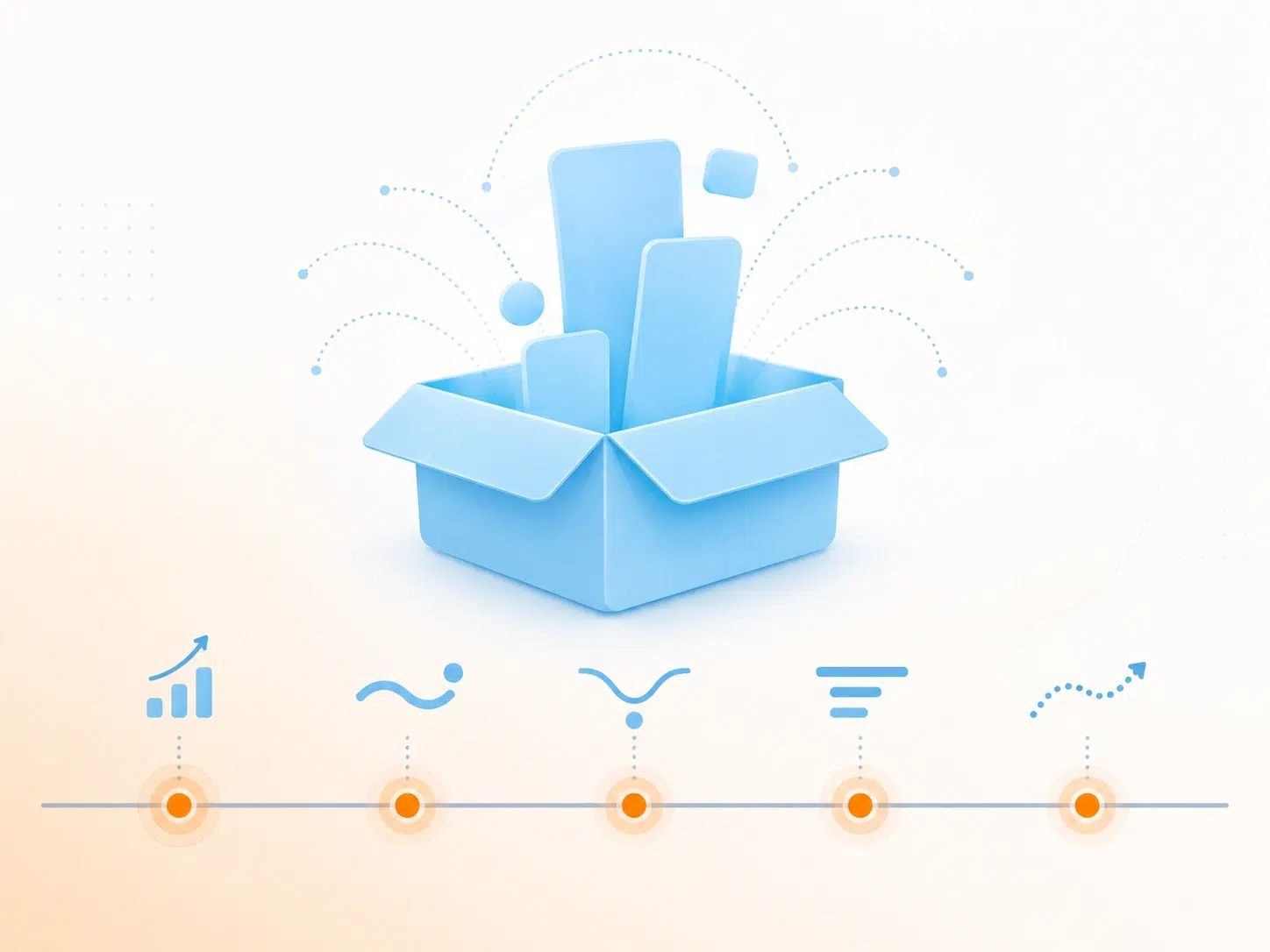
Picture a creator doing an unboxing. Video AI listening tracks vocal energy across the entire clip, mapping the emotional arc from start to finish. That sharp intake of breath when they first see the product is captured. The slight tremor of excitement when they describe the texture is captured. The half-second hesitation when they encounter the fiddly bit of the setup is flagged. The drop in energy when they realise something is missing is logged with a timestamp. 
Building the Emotional Timeline

The output is something far more useful than a sentiment score. You get an emotional timeline. A dynamic map of exactly when and how strongly different feelings appear inside a single piece of content. You can see the precise second delight tips into confusion. You can see the moment frustration gives way to satisfaction. 

For a brand team, that is the difference between knowing a video was “broadly positive” and knowing the customer loved the product but was annoyed by the packaging at minute one, twenty seconds in. One of those insights changes a product decision. The other gets filed and forgotten. 

Context Is the Hidden Layer

Even emotional timelines are not the full picture. The most useful layer of video AI listening is contextual understanding. 

The system needs to know the difference between “I’m dying” in a comedy skit and “I’m dying” in a health complaint. It needs to recognise that “sick” is positive when a skater lands a trick and negative in a wellness review. It needs to detect whether background music is upbeat or sombre, whether two speakers are agreeing or arguing, and whether ambient sound suggests a studio, a kitchen or a car. 

That contextual processing happens through multi-modal analysis. The system considers visual elements such as facial expressions, on-screen text and physical setting. It processes audio components like speech, music and ambient sound. It tracks temporal patterns, watching how everything shifts across the duration of the video. The result is a complete situational read, not just a transcript. 

This matters because human meaning is contextual. The same sentence in a different room with different background sound from a different speaker can carry an entirely different message. A tool that flattens all of that into a single sentiment label is not analysing video. It is guessing. 

Why Video AI Listening Matters Now

Here is the hard reality most marketing teams are now facing. Video has eaten the social internet. TikTok, Instagram Reels, YouTube Shorts, podcast clips and live streams are where brand conversations actually happen. The figures vary depending on the source, but every credible estimate puts video at well over eighty per cent of social content consumed by the average user. 

Text-based monitoring is essentially flying blind through that landscape. A traditional tool might catch the video if a creator adds a caption or a hashtag, but it is missing the vast majority of authentic, unscripted content. The product review posted as a sixty-second TikTok with no caption is invisible. The podcast mention of your brand is gone. The Instagram Reel where someone raves about the product without typing your name is lost. 

Tools built for a text-first internet are not just limited any more. They are becoming structurally obsolete. The conversation has moved. The infrastructure has not. 

How Video AI Listening Actually Works

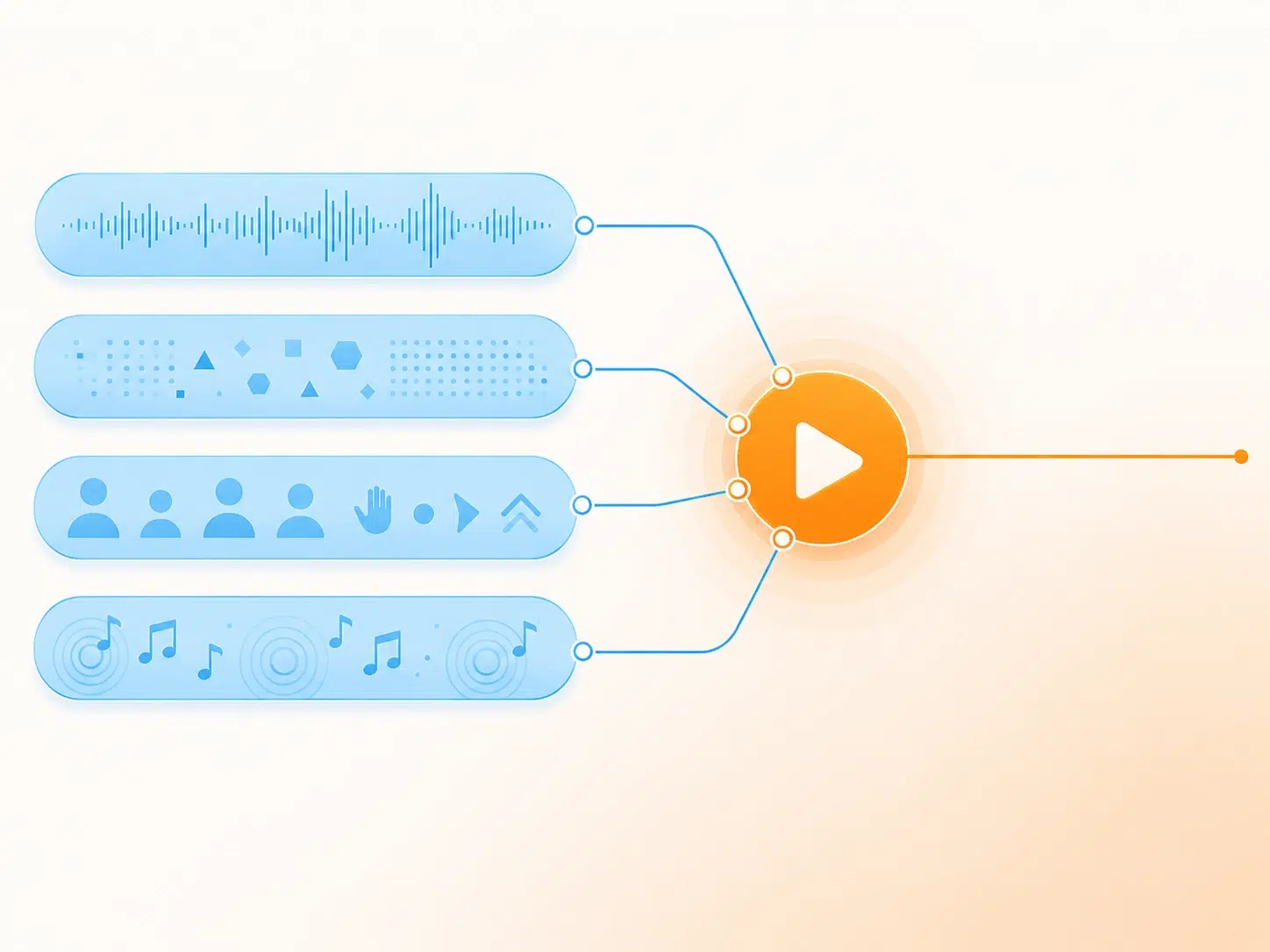
Under the hood, video AI listening is not one model. It is a stack of them working in parallel and then reconciling their answers. 

Speech recognition handles the words. Acoustic models handle the delivery. Vision models handle facial expression, gesture and on-screen text. Audio scene models handle ambient sound and music. Multi-modal classifiers then pull every signal together and check the interpretation against millions of similar examples before anything reaches a dashboard. 
How Video AI Listening Actually Works

When all of those layers agree, confidence is high. When they disagree, as with the sarcastic coffee maker review where the words say one thing and the voice says another, the system flags the mismatch rather than guessing. That is the structural reason video AI listening produces sharper insight than any single-stream tool can match. 

Making that stack run at the scale of TikTok, Instagram and YouTube was a real engineering problem. The Social Voice team walked through that side of the story in their piece on the technical evolution behind video social listening. 

What This Means for Your Brand

Most social listening reports still look the same as they did five years ago. Mention volume, sentiment percentage, top hashtags, trending topics. All useful. All incomplete. 

Now picture the same report informed by video AI listening. You see exactly which product features generate genuine excitement in unboxing videos, not just polite mentions. You know precisely where in the customer journey people get frustrated, with timestamps. You understand which messages resonate emotionally rather than just intellectually. You catch authentic endorsements that never appear in any text-based search because the creator never typed your brand name. 

This is not theoretical. Brands using full-spectrum video analysis are finding conversations they did not know existed. They are spotting issues weeks before they would have escalated into something visible to a text-only tool. They are identifying creators who quietly champion the product without ever being asked. They are making product, messaging and crisis decisions based on what people actually felt, not just what a transcript happened to capture. 

The gap between brands using text-only monitoring and those layering in video AI listening is widening fast. It shows up in product development, in crisis response, in influencer strategy and in the speed at which insight reaches the rooms that matter. 

The Bottom Line

A useful way to think about all of this. Text-based social listening is reading a play. Video AI listening is sitting in the theatre. Same script, two completely different experiences. Most enterprise tools are still handing brand teams the script and asking them to imagine the performance. 

If your current social listening setup is built around captions, hashtags and machine transcripts, it is almost certainly missing the conversations that move the needle. Social Voice runs as an API-first layer alongside the enterprise social listening platforms you already use, adding the voice, visual and contextual signals your existing stack cannot see. Request a demo and we will show you what is being said about your brand inside the video content your dashboard is currently treating as silent. 

30 May 2026
https://socialvoice.ai/wp-content/uploads/2026/05/Inside-the-Signal-What-AI-Actually-Hears-When-It-Listens-to-Social-Video.webp 1000 1000 Robert Hawkes https://socialvoice-ai.stackstaging.com/wp-content/uploads/2025/09/Social-Voice-Blue.webp Robert Hawkes2026-05-30 14:18:072026-05-30 14:24:25Inside the Signal: What AI Actually Hears When It Listens to Social Video

The Video Blind Spot: Why Social Listening Platforms Are Missing 95% of the Brand Conversation

Social Listening

Social listening platforms can read the internet, but they cannot watch it. Most of them still index captions, comments and on-screen text, which means video intelligence for social listening remains the single largest blind spot in the category. The numbers are uncomfortable. More than 95% of brand-relevant signal now lives inside video content on TikTok, Instagram, YouTube and the platforms replacing them, yet the conversations happening on screen, in voiceovers and inside visual context never reach the dashboards product teams have spent a decade building. For platform partners, this is not a minor coverage gap. It is the part of the social web where culture actually happens, where buying decisions are influenced and where brand reputation is made or unmade in seconds. The question is no longer whether to address it, but how quickly. 

Why social listening platforms cannot see inside video

For two decades, social listening has been a text problem. The architecture of every major platform reflects that history. Ingestion pipelines pull in posts, captions, hashtags and replies, run them through sentiment and topic models, then surface the result on a dashboard. The system works beautifully on tweets, threads and forum posts. It collapses the moment the conversation moves on screen. 

The reason is structural, not commercial. Video is unstructured data wrapped in three further layers of unstructured data. There is the spoken audio, often layered with music, accents and overlapping voices. There is the visual scene, where products, logos, locations and reactions carry the real meaning. And there is the cultural context, the format conventions and references that decide whether a clip is praise, parody or pile-on. Captions, where they exist at all, capture a fraction of one of those layers. Pulling genuine signal out of a sixty-second clip needs speech recognition, computer vision, scene understanding and contextual reasoning working in concert, all returned fast enough for a listening platform to act on. 


Most platforms were never built to carry that weight. Adding it natively means rebuilding the ingestion pipeline, hiring an AI team and absorbing the model costs into a roadmap already stretched across generative features, regulatory work and new channel coverage. The result, almost everywhere in the category, is the same. Video gets a checkbox in the product marketing and a transcript in the dashboard, while the actual on-screen story stays invisible. Video intelligence for social listening is not a feature that can be retrofitted. It is a distinct capability layer and treating it as anything less is what leaves the blind spot exactly where it is. 

See how Social Voice integrates with social listening platforms to fill the gap → 

What video intelligence actually means

The phrase gets used loosely, which is part of why the category has been slow to form. Pulling a transcript out of a video is not video intelligence. Tagging a clip with a topic label is not video intelligence. Both are useful, but both still treat video as an inconvenient delivery format for text, rather than as the primary signal in its own right. A serious capability has to address what the medium actually contains. 

Three layers matter, and they have to work together to produce anything a listening platform can trust: 

  • Voice. Speech recognition across accents, code-switching, background music and overlapping speakers, plus the speaker attribution that lets a brand know whether a claim came from a creator, a guest or an off-camera voiceover. 
  • Visuals. Detecting products, logos, packaging, locations, on-screen text and the human reactions that decide whether a mention is endorsement or mockery. 
  • Context. The cultural and format-aware reasoning that distinguishes a genuine review from a stitch, a parody from a complaint and a trend participation from an original brand moment. 

None of these layers stands up on its own. A transcript without visual context misreads sarcasm. Object detection without speech misses the claim being made about the object. Context without either is guesswork. The only output that earns its place inside a listening dashboard is one that fuses all three into a single, structured signal that looks and behaves like every other data point the platform already trusts. That is the bar Social Voice was built to clear, and it is the bar any credible video intelligence provider should be measured against. 

What video intelligence actually means

Learn how Social Voice delivers video intelligence for global brands → 

The build vs partner question for platform product teams

Every platform leader who has looked seriously at video coverage has run the same internal exercise. Build it natively, partner with a specialist, or wait. The third option is the one quietly losing ground, because the gap is now visible to customers and the largest accounts are starting to ask pointed questions in renewal conversations. The real choice is between the first two, and the maths is less balanced than it first appears. 

Building natively looks attractive on a roadmap slide. In practice, it absorbs an AI team, a model-ops function, GPU spend that scales with ingestion volume and a multi-year programme to reach parity with vendors who have been working on the problem for years. It also competes for engineering time with generative features, regulatory work and the continual catch-up that comes with new channels and changing platform APIs. The opportunity cost is rarely written down, but it is the single biggest line item. 

Partnering with a video intelligence specialist inverts the equation. The capability arrives as a managed API, priced per use, with the model investment carried by the partner. The platform keeps ownership of the customer relationship, the dashboard and the workflow. The specialist focuses on what only a specialist can do well, which is staying ahead of model performance, language coverage and the moving target of social video formats. The integration becomes a commercial decision rather than a multi-year engineering project, and the time to a credible video story shortens from years to a quarter. 

The platforms that have already made this call are not treating it as outsourcing. They are treating it as category positioning. Owning the customer, leaning on a specialist for the hardest part of the stack, and shipping the coverage their largest accounts have been quietly waiting for. 

How an API-first video layer slots into an existing stack

The integration question is where most partnership conversations get serious, and it is also where Social Voice was designed to be easy. An API-first architecture means the video intelligence layer never asks a platform to change its data model, its dashboard or its commercial packaging. Video URLs go in, structured signal comes back, and the receiving platform decides how to surface it inside the experience its customers already know. 

In practice, the integration follows a familiar shape. The platform’s existing ingestion pipeline identifies video content from its monitored sources and passes the URL or file reference to the Social Voice API. The API returns a structured response containing the transcript, speaker attribution, detected objects and logos, on-screen text, scene-level descriptions and the contextual signals that make the clip interpretable. That response is indexed alongside the platform’s existing text data, which means search, filtering, alerting and reporting all work without bespoke front-end work. Sentiment, share of voice and topic models the platform already runs can be extended over the new fields, rather than rebuilt. 

How an API-first video layer slots into an existing stack

Three properties make this work at the scale a listening platform demands. Latency is engineered for ingestion volume, not interactive use, so processing keeps pace with the firehose. Output is fully structured, which means downstream systems treat video signal as just another row in the index. And the commercial model is built for partner economics, with usage-based pricing that maps cleanly onto how platforms charge their own customers. 

The result, for a platform partner, is the shortest credible path from a video coverage gap to a coverage story worth taking into renewal conversations. The engineering lift is measured in sprints rather than years, the capability lands as a clean addition rather than a reorganisation, and the partnership leaves the platform in full control of its customer relationship. 

Explore a worked example in our skin care case study → 

The blind spot will not close on its own, and the platforms that move first to add genuine video coverage will define the next chapter of social listening. Partnering with a dedicated video intelligence layer is faster, cheaper and more defensible than trying to rebuild the ingestion stack from scratch. Social Voice is API-first by design, built to slot into existing platforms rather than compete with them, and already unmuting video for brands, agencies and platform partners across the category. If extending your platform’s coverage into video is on the roadmap, the most useful next step is a short technical conversation. 

Request a demo → 

18 May 2026
https://socialvoice.ai/wp-content/uploads/2026/05/Video-Intelligence-for-Social-Listening-The-95-Gap.webp 1000 1000 Robert Hawkes https://socialvoice-ai.stackstaging.com/wp-content/uploads/2025/09/Social-Voice-Blue.webp Robert Hawkes2026-05-18 17:20:072026-05-18 17:35:21The Video Blind Spot: Why Social Listening Platforms Are Missing 95% of the Brand Conversation

The Iceberg Effect: Video Social Listening Explained

Social Video Intelligence, Social Intelligence, Social Listening

Remember the Titanic. The crew could see the tip of the iceberg. What they could not see was the vast mass waiting beneath the surface. That is exactly what is happening to brands trying to do social listening in a video-first world.

If you are still running your social listening programme on tools that scan text, hashtags and @mentions, you are looking at the tip. The real conversation about your brand is happening inside video, where traditional tools cannot see or hear it. And that hidden iceberg is usually the one that sinks the ship.

This post explains why video social listening has become the blind spot that matters most, the two types of iceberg every brand now needs to watch for, and how an intelligence-led approach can help you see beneath the surface without boiling the ocean.

The scale of the problem

Video is now the dominant form of content on the internet. According to AppLogic Networks (formerly Sandvine), video streaming accounts for the majority of global internet traffic, with YouTube alone leading both app and subscriber volumes across every region. Wyzowl’s 2026 video marketing report found that 89% of consumers say video quality directly affects their trust in a brand, and 63% prefer to learn about a product or service through a short video rather than text, infographics or sales calls.

The implication for brands is simple. If the majority of consumers now express opinions, reviews, complaints and recommendations through video, then any social listening programme that reads only text is capturing a fraction of the signal. And the fraction it misses is growing every quarter.

The two icebergs every brand needs to see

When we talk to brand teams about video social listening, we find it helps to think in terms of two distinct icebergs, one easy to spot and one that is not.

The visible iceberg

These are videos that helpfully include your brand name in hashtags, use @mentions, or tag you directly. Your traditional social listening tools can find them with no trouble. They are polite enough to knock on the door and announce themselves.

This is the world most social listening dashboards were built for, and it is the world most brands are still monitoring. The problem is that it is a smaller and smaller share of what is actually being said.

The hidden iceberg

These are videos where your product appears on screen, your logo flashes by, someone verbally discusses your brand, or your service gets reviewed, but nothing in the metadata gives anything away. No hashtags. No @mentions. No tags. Just pure visual and audio content that your current monitoring systems sail straight past.

A beauty creator mentions your foundation in the middle of a ten-minute tutorial. A tech reviewer compares your product unfavourably against a competitor but calls neither by name in the title. A food blogger films a viral restaurant review in which your branding is clearly visible on the coffee cups.

None of this shows up in metadata. All of it shapes how your brand is perceived. And the hidden iceberg is almost always bigger than the visible one.

Why the 30-hour crisis window is closing faster than ever

PR teams have lived by a rough rule for years: you have roughly 30 hours to identify a potential crisis and respond before the narrative hardens. That window assumes one critical thing. That you actually know the crisis exists.

Now picture the scenario. A TikTok video showing your product failing starts to gain traction. No hashtag. No mention. Just a creator, a camera and an angry consumer. By the time the video surfaces through your customer service inbox, a journalist’s DM or (worst of all) your CEO’s email, it has been viewed two million times and the conversation has moved on without you.

That is not a hypothetical. It is the daily reality of video-first social media. And the 30-hour window now closes in a matter of hours, not days, because videos can go viral before a single piece of written coverage has been published.

The only way to reopen that window is to start monitoring what is actually inside video, not just what surrounds it.

Why traditional social listening tools cannot help

Most enterprise social listening platforms are sophisticated, well-engineered products. Brandwatch, Sprinklr, Meltwater, Talkwalker and their peers have built genuinely impressive technology for ingesting, filtering and visualising text-based social data. None of that is in question.

What they all share, however, is that they were designed in and for the text-first era of social media. Their core models read captions, comments, hashtags and metadata. When they encounter video, they can only read what surrounds the video, not what is inside it.

This is not a failure of engineering. It is a limitation of category. Analysing the inside of a video is a fundamentally different technical problem. It requires computer vision models to understand visual content, automatic speech recognition tuned for casual and multi-accent speech, acoustic analysis to capture tone and emotion, and enough infrastructure to process terabytes of video daily at enterprise scale. Building that in-house is a multi-year undertaking that pulls focus from everything else a listening platform does well.

Which is why the smart money in the industry is not building it in-house. It is integrating specialist partners that have already solved the problem.

The intelligence approach: how to see the iceberg without boiling the ocean

Here is the understandable objection when you first hear about video social listening. Surely it is impossible to watch every video, on every platform, in every language, every day? You would drown in data and burn through budget before lunch.

You are right. And you do not need to.

The answer lies in how intelligence agencies have always worked. They do not read every email or listen to every phone call on the planet. They look for patterns. They combine signals. They use smart filters to identify what deserves deeper attention. Video social listening works the same way.

Before any video is analysed in depth, it can be pre-qualified against layered signals that predict whether it is likely to matter:

  • Influencer reach: who created the video and what is their audience size, engagement rate and historical relevance to your category?
  • Speed of engagement: how quickly is this video gaining traction? A slow burn can be as meaningful as an instant viral hit.
  • Hashtag and topic virality: which tags are being used and are they trending or linked to emerging conversations?
  • Creator networks: is this video part of a wider cluster of creators discussing similar topics at the same time?
  • Topic freshness: is this touching on something new, or revisiting well-worn ground?

When you combine these signals intelligently, something useful happens. You start to see which videos are likely to be icebergs before you have analysed what is actually inside them. You can prioritise your compute budget on the content that matters, stay within spend and still maintain meaningful coverage across the creators and conversations that shape your category.

This is what we mean by the intelligence approach. It is not about watching everything. It is about knowing where to look, using signal to guide attention, and then applying deep inside-video analysis to the content that has earned it.

Why category agility matters

Here is where many brands get caught out. They experience a crisis or a significant conversation in one category (let us say tech reviews) and they double down their monitoring efforts there. But the next challenge rarely reads the same playbook. It emerges from beauty, gaming or fitness creators instead.

The landscape shifts constantly. A fine-tuned video social listening programme needs to cast its net across a wide spectrum of categories, not just the ones that caused problems last time. This is about being proactive rather than reactive, and about building a monitoring system smart enough to adapt to wherever the conversation is actually happening.

The combination of broad category coverage and layered intelligence signals is what separates a genuine video social listening programme from a tool that only monitors what it has been told to look for.

What this means for your brand

If your current social listening setup relies solely on text and metadata, you are not getting a complete picture of how your brand is perceived. You are getting the tip of the iceberg. And in a market where most brand conversations have migrated into video, that tip is shrinking as a share of the whole.

The good news is that closing this gap does not mean ripping out and replacing your existing platform. Social Voice is built as an integration layer that sits alongside your current tools, feeding inside-video intelligence directly into the dashboards and workflows your team already uses. Your text-based listening carries on unchanged. You simply stop being blind to video.

The brands seeing the biggest wins are not the ones with the most tools. They are the ones with the most complete picture. The ones who know, at any given moment, what is being said about them on screen, in voice and in context, and who can act on that knowledge before the conversation hardens.

See beneath the surface

The hidden iceberg is out there right now. Videos about your brand that your current tools cannot see. Some positive, some negative, some neutral. All of them shaping how your brand is perceived.

The question is no longer whether these videos exist. The question is whether you will find them in time to do something about them.

If you would like to see what video social listening could reveal about your brand specifically, we would be happy to show you. Book a short consultation call with the Social Voice team and we will walk you through the conversations your current tools are missing, the signals we would prioritise for your category, and what a proactive monitoring approach could look like in practice.

The icebergs are there. Now you can finally see them coming.

Book a demo with the Social Voice team →

28 April 2026
https://socialvoice.ai/wp-content/uploads/2026/04/The-Iceberg-Effect-Video-Social-Listening-Explained.webp 1000 1000 Robert Hawkes https://socialvoice-ai.stackstaging.com/wp-content/uploads/2025/09/Social-Voice-Blue.webp Robert Hawkes2026-04-28 19:54:572026-04-28 20:01:03The Iceberg Effect: Video Social Listening Explained

Why Enterprise Social Listening Platforms Are Quietly Adding Video Intelligence Partners

Social Video Intelligence, Social Intelligence, Social Listening

Social video intelligence is no longer a nice-to-have in the enterprise social listening category. It is a requirement, and the way the biggest platforms are getting it into their stacks tells you everything you need to know about the economics.

Brandwatch, Sprinklr, Meltwater, Talkwalker and their peers are not short of engineering talent. They are not short of infrastructure, data science teams or capital. And yet, when it comes to analysing what is actually said, shown and meant inside video content, they are all doing the same thing. They are partnering for it rather than building it.

This post explains why that is happening, why the build versus buy maths is more brutal than it first appears, and what it means for any social listening platform still weighing up its options.

The pattern you may have already noticed

If you track the enterprise social listening space closely, the signal is clear. Announcements about video analysis capabilities are increasingly framed as integrations, not product launches. Press releases mention specialist AI partners. Product roadmaps quietly swap “build internal video analysis” for “integrate best-in-class video intelligence.”

This is not an accident. It is a deliberate strategic choice being made by product leaders who have run the numbers on what it would actually cost to own video intelligence end-to-end and decided the maths does not work.

Here is what those numbers look like.

Social video intelligence: a different kind of technical problem

Text-based social listening has matured over 15 plus years. The technology stack is well understood. Sentiment models are refined. Entity recognition is reliable. Infrastructure patterns are established. An engineer joining a listening platform in 2026 inherits a mature discipline with clear best practices.

Video throws all of that out the window.

Start with the compute requirement. Analysing a single minute of video requires processing power roughly equivalent to analysing thousands of text posts. Multiply that across millions of videos uploaded daily across TikTok, Instagram Reels, YouTube Shorts and the long tail of platforms, and you are looking at infrastructure bills that make a CFO’s eye twitch.

Then there is the model complexity. Video intelligence is not one problem, it is a dozen interconnected problems. Each of them needs specialist models, continuous training and constant optimisation:

  • Object detection to identify products, logos and scenes
  • Optical character recognition for on-screen text and graphics
  • Automatic speech recognition tuned for casual, multi-accent, often noisy audio
  • Speaker diarisation to separate multiple voices in the same clip
  • Acoustic analysis for tone, emphasis and emotional prosody
  • Logo and brand visibility measurement
  • Context and scene understanding at the clip level
  • Cross-platform normalisation because TikTok, Instagram and YouTube all behave differently

Each of those requires specialist expertise. And crucially, the models need to work across languages, cultural contexts, lighting conditions, audio qualities and platform-specific formats. What works on a polished YouTube review does not work on a handheld TikTok rant. The performance bar is enterprise-grade or nothing.

The talent problem nobody talks about

Building enterprise-grade social video intelligence means assembling a team of specialists you do not currently have. Computer vision engineers, machine learning operations experts, video codec specialists, audio signal processing engineers and domain experts who understand brand safety and advertising context.

These are not generalist developers. They are niche experts with niche compensation expectations and a job market that favours them, not you.

Most enterprise listening platforms have spent years building world-class teams for text analysis, social data ingestion and dashboard engineering. Pivoting those teams to video means one of two uncomfortable options. Either you retrain your existing engineers on an entirely different discipline, which is slow, risky and demoralising. Or you hire an entirely new vertical of specialists alongside them, which is expensive, culturally disruptive and creates internal competition for resources.

Meanwhile, specialist social video intelligence providers have been doing nothing but video for years. They have already made the hiring mistakes, optimised the models, built the infrastructure and learned the lessons you would be about to learn on your own time and budget.

The speed-to-market reality

Imagine you are the chief product officer at a major listening platform. Your enterprise clients are asking for TikTok and YouTube Shorts video analysis. They want it in their Q4 campaign planning cycle. You have two options.

Option A: launch an internal social video intelligence project. Scope the requirements, hire the specialists, build the infrastructure, train the models, test across edge cases, integrate with your existing product, handle the platform API changes that will inevitably happen mid-build, and launch in 18 to 24 months. Maybe longer if anything goes wrong, which it will.

Option B: partner with a proven video intelligence provider. Scope the integration, connect the API, customise the output for your dashboard, test with a pilot client and launch in three to six months.

Your clients are not going to wait two years. Your competitors might not either. The RFPs coming across your desk right now are specifying video analysis as a requirement, not a nice-to-have, and the ones you lose while you are building will not come back once you finally launch.

This is the calculation that explains the partnership pattern. It is not a failure of ambition. It is strategic clarity.

What platforms gain from social video intelligence partnerships

The argument for partnering is not just about avoiding the build cost. It is about the strategic advantages that come with specialist depth you could not replicate in-house.

Immediate expertise

You get technology built by teams who have been solving video problems for years, not months. Models trained on millions of video examples across every major platform. Edge cases already handled. Accuracy benchmarks already met.

Continuous innovation without internal cost

Your partner’s entire business depends on staying ahead in video AI. They are investing in research and development you do not have to duplicate. When a new platform emerges or an existing one changes its format, they adapt because it is their core focus.

Flexible scaling

You pay for usage rather than maintaining expensive infrastructure for peak loads. When a client runs a major campaign monitoring project, you scale up. When things quieten down, you scale back. No capex, no stranded compute, no dead teams between projects.

Faster adaptation to the platform landscape

When TikTok changes its API or a new short-form video platform emerges, a specialist partner adapts in weeks because it is the only thing they do. An internal team juggling ten other priorities will always be slower.

Strategic risk mitigation

If video analysis does not deliver the return on investment you expected, you can adjust or pivot without massive sunk costs in proprietary technology. You have not bet the company on a capability that may or may not pan out.

What this means for the market

The partnership trend reveals something important about how enterprise software is evolving more generally. The days of monolithic platforms that build everything in-house are ending. The best social listening platforms are becoming excellent orchestrators. They maintain their core strengths in data aggregation, dashboard experience and cross-channel insights, while plugging in specialist capabilities where the depth requirement exceeds the benefit of internal ownership.

Social video intelligence is the first domino. Podcast analysis, livestream monitoring and emerging platform coverage will follow the same pattern, because the underlying logic is the same. Specialists who focus relentlessly on one hard problem will always outperform generalists trying to solve ten problems at once.

For platforms that recognise this early, there is a competitive window. You can get ahead of the RFP cycle, win enterprise deals your competitors are still not equipped to pursue and differentiate on capabilities your clients can actually see in their dashboards next quarter, not in 2028.

For platforms that wait, the window closes. Every quarter you spend debating build versus buy is a quarter your competitors are closing deals you will not win.

The bottom line

The enterprise platforms adding social video intelligence partners are not admitting weakness. They are demonstrating strategic clarity. They understand that competitive advantage in 2026 comes from knowing what to build, what to buy and how to integrate it seamlessly for clients who do not care about the architecture, only the output.

The question is not whether your platform should offer social video intelligence. Your clients are already demanding it, and the ones asking nicely today will be issuing RFP requirements about it next year. The real question is whether you want to spend the next 18 to 24 months and several million dollars building something specialist partners have already perfected.

Social Voice is built as an API-first integration layer that plugs into your existing stack without disruption. No rip and replace. No new dashboards for your clients to learn. Just the missing 95% of brand conversation that currently lives inside video, surfaced in the product you already ship.

Book a call to see what a platform partnership looks like in practice →

9 April 2026
https://socialvoice.ai/wp-content/uploads/2026/04/Social-video-intelligence-build-vs-buy-decision-for-enterprise-social-listening-platforms.webp 1200 1200 Robert Hawkes https://socialvoice-ai.stackstaging.com/wp-content/uploads/2025/09/Social-Voice-Blue.webp Robert Hawkes2026-04-09 15:53:282026-04-09 16:21:28Why Enterprise Social Listening Platforms Are Quietly Adding Video Intelligence Partners

Pages

  • About
  • Blog
  • Case Study – Brand Safety
  • Case Study – Skin Care
  • Cookie Policy (AU)
  • Cookie Policy (BR)
  • Cookie Policy (CA)
  • Cookie Policy (EU)
  • Cookie Policy (UK)
  • Cookie Policy (ZA)
  • Disclaimer
  • Imprint
  • Investors
  • Opt-out preferences
  • Our People
  • Privacy Statement (AU)
  • Privacy Statement (BR)
  • Privacy Statement (CA)
  • Privacy Statement (EU)
  • Privacy Statement (UK)
  • Privacy Statement (US)
  • Privacy Statement (ZA)
  • Request Demo
  • Social Listening Platforms Integration
  • Social Video Intelligence for Brands and Agencies
  • Social Voice
  • Video Insights Co-Pilot

Categories

  • Authenticity
  • Social Intelligence
  • Social Listening
  • Social Strategy
  • Social Video Intelligence
  • Uncategorised

Archive

  • May 2026
  • April 2026
  • January 2026
  • December 2025
  • November 2025
  • October 2025
  • September 2025
  • August 2025
  • July 2025
  • June 2025
  • May 2025
  • April 2025

Solutions

  • Social Video Intelligence for Brands and Agencies
  • Social Listening Platforms Integration

Resources

  • Request Demo
  • Our Story
  • Our People
  • Unmuted [ The Blog ]
  • Chrome Extension
  • Case Study – Skin Care
  • Case Study – Brand Safety
  • Disclaimer
  • Cookie Policy
  • Privacy Statement

Socials

  • LinkedIn

Across Major Platforms

© Copyright - Social Voice | website & marketing by Method Marketing
Scroll to top Scroll to top Scroll to top
Social Voice
Manage Consent
To provide the best experiences, we use technologies like cookies to store and/or access device information. Consenting to these technologies will allow us to process data such as browsing behaviour or unique IDs on this site. Not consenting or withdrawing consent, may adversely affect certain features and functions.
Functional Always active
The technical storage or access is strictly necessary for the legitimate purpose of enabling the use of a specific service explicitly requested by the subscriber or user, or for the sole purpose of carrying out the transmission of a communication over an electronic communications network.
Preferences
The technical storage or access is necessary for the legitimate purpose of storing preferences that are not requested by the subscriber or user.
Statistics
The technical storage or access that is used exclusively for statistical purposes. The technical storage or access that is used exclusively for anonymous statistical purposes. Without a subpoena, voluntary compliance on the part of your Internet Service Provider, or additional records from a third party, information stored or retrieved for this purpose alone cannot usually be used to identify you.
Marketing
The technical storage or access is required to create user profiles to send advertising, or to track the user on a website or across several websites for similar marketing purposes.
  • Manage options
  • Manage services
  • Manage {vendor_count} vendors
  • Read more about these purposes
View preferences
  • {title}
  • {title}
  • {title}
Social Voice
Manage Consent
To provide the best experiences, we use technologies like cookies to store and/or access device information. Consenting to these technologies will allow us to process data such as browsing behaviour or unique IDs on this site. Not consenting or withdrawing consent, may adversely affect certain features and functions.
Functional Always active
The technical storage or access is strictly necessary for the legitimate purpose of enabling the use of a specific service explicitly requested by the subscriber or user, or for the sole purpose of carrying out the transmission of a communication over an electronic communications network.
Preferences
The technical storage or access is necessary for the legitimate purpose of storing preferences that are not requested by the subscriber or user.
Statistics
The technical storage or access that is used exclusively for statistical purposes. The technical storage or access that is used exclusively for anonymous statistical purposes. Without a subpoena, voluntary compliance on the part of your Internet Service Provider, or additional records from a third party, information stored or retrieved for this purpose alone cannot usually be used to identify you.
Marketing
The technical storage or access is required to create user profiles to send advertising, or to track the user on a website or across several websites for similar marketing purposes.
  • Manage options
  • Manage services
  • Manage {vendor_count} vendors
  • Read more about these purposes
View preferences
  • {title}
  • {title}
  • {title}