TikTok, Instagram Reels, and YouTube Shorts: Why Video-First Platforms Require Video-First Analytics
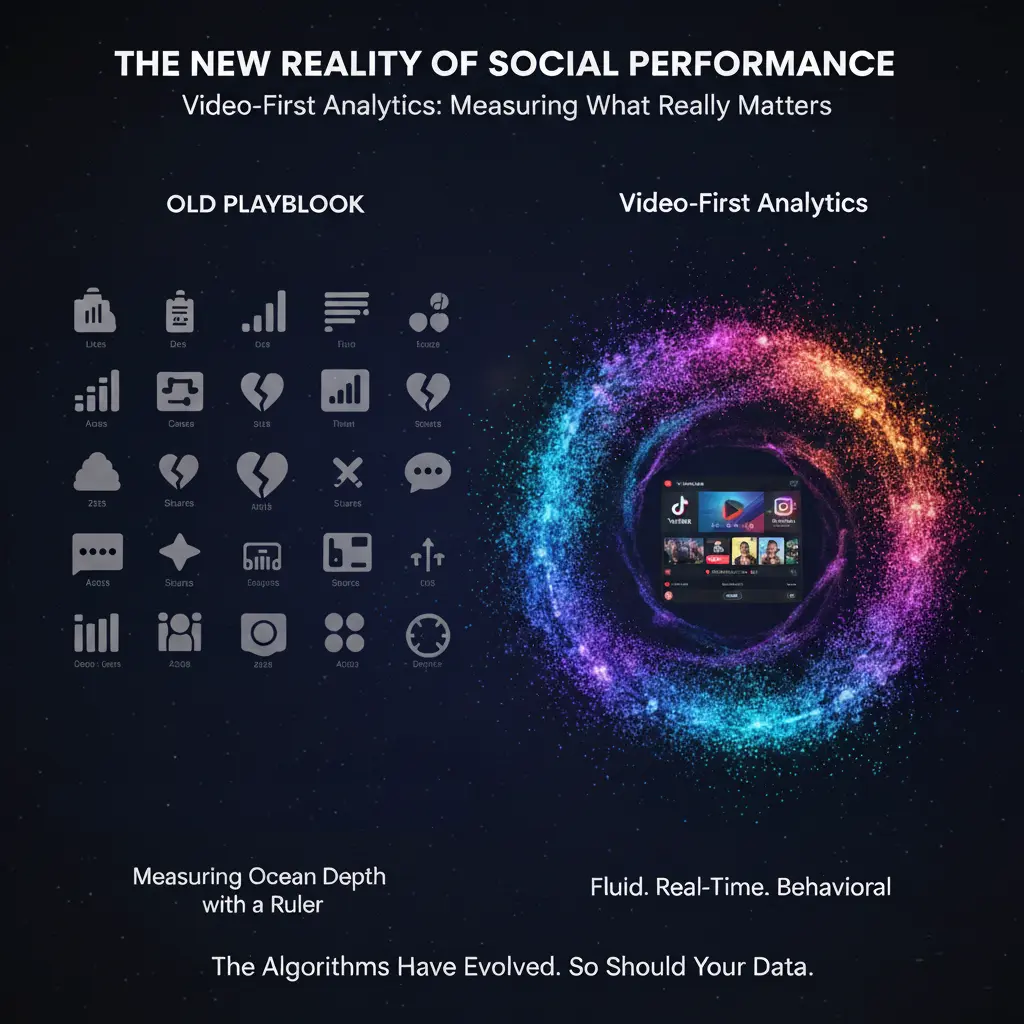
The New Reality of Social Performance
The numbers don’t lie. Short-form video now dominates social media.
-
TikTok users spend an average of 95 minutes per day on the app.
-
Instagram Reels account for over 20% of all time spent on the platform.
-
YouTube Shorts rack up 70 billion daily views.
If your brand isn’t showing up in these feeds, you’re effectively invisible to a massive portion of your audience.
But here’s the problem: most analytics tools were built for a different era.
See how Social Voice helps brands measure what traditional tools miss →
The Old Playbook Doesn’t Work Anymore
Legacy social analytics tools were designed for a world of posts and photos — not for short-form video ecosystems powered by algorithms and micro-signals.
They still track likes, comments, and shares. They still measure engagement based on static content principles. But they fail to reflect how audiences actually consume video.
Using traditional metrics to evaluate TikTok or Reels performance is like trying to measure ocean depth with a ruler.
Why Video-First Analytics Are Different
Video-first platforms operate on entirely new behavioural models. Every scroll, pause, and replay tells the algorithm what matters.
TikTok measures watch time, replays, and sound engagement.
Instagram Reels prioritises completion rate and retention curves.
YouTube Shorts analyses viewer drop-offs and rewatch behaviour.
These signals determine whether your content reaches 500 people or 5 million. To succeed, your analytics need to speak the same language.
The Metrics That Actually Matter
Modern video analytics track signals that legacy tools miss entirely:
-
Completion rate & watch time — measure whether your hook works and if people stay until the end.
-
Rewatch & loop rate — show how compelling your content really is.
-
Sound-on rates — reveal how well your audio strategy converts scrollers into engaged viewers.
-
Traffic sources — highlight whether discovery is happening via hashtags, the For You Page, or shares.
-
Follower vs. non-follower views — indicate if you’re expanding reach or just talking to your existing audience.
Data without context is noise. Video-first analytics interpret why performance happens — not just what happened.
When Real-Time Becomes Non-Negotiable
Trends on TikTok move at lightning speed. A video can go viral in hours, and the opportunity to respond or replicate can vanish just as quickly.
By the time a legacy analytics tool updates its dashboard, the trend has already moved on.
Video-first analytics must be real-time — giving you visibility into what’s working now, so you can act before your competitors do.
The Cross-Platform Challenge
Most brands repurpose their content across multiple platforms — TikTok, Instagram Reels, YouTube Shorts, even LinkedIn video.
But each one measures success differently. Native dashboards are inconsistent, making cross-platform comparison nearly impossible.
Video-first analytics consolidate these fragmented insights into one cohesive view — revealing where your content truly performs best and where it needs refinement.
Discover how Social Voice helps unify cross-platform analytics for Brands & Agencies →
It’s Not Just About Better Dashboards
Video-first analytics go beyond prettier graphs. They deliver strategic intelligence:
-
Why did one video outperform another with similar content?
-
Which hooks, topics, and posting times drive audience growth?
-
How can your creative team replicate success in real time?
These aren’t vanity insights — they’re actionable signals that drive creative optimisation and audience expansion.
The Risk of Staying Legacy
Brands clinging to traditional analytics are flying blind in a video-first world. They’re missing trend windows, misreading performance, and losing creative edge to competitors who have already upgraded.
Those using video-first analytics are learning faster, reacting faster, and winning faster — because they’re working with a complete picture.
The Bottom Line
The shift to short-form video isn’t slowing down. Every quarter, the algorithms evolve — and so do the expectations for data sophistication.
If you’re still measuring video through a static lens, you’re not seeing reality.
The platforms have evolved. Your analytics should too.
Ready to see what you’ve been missing?
Discover Our Story →